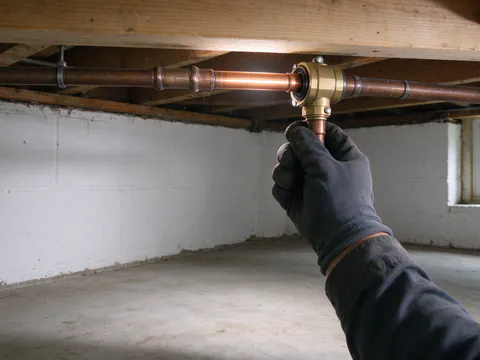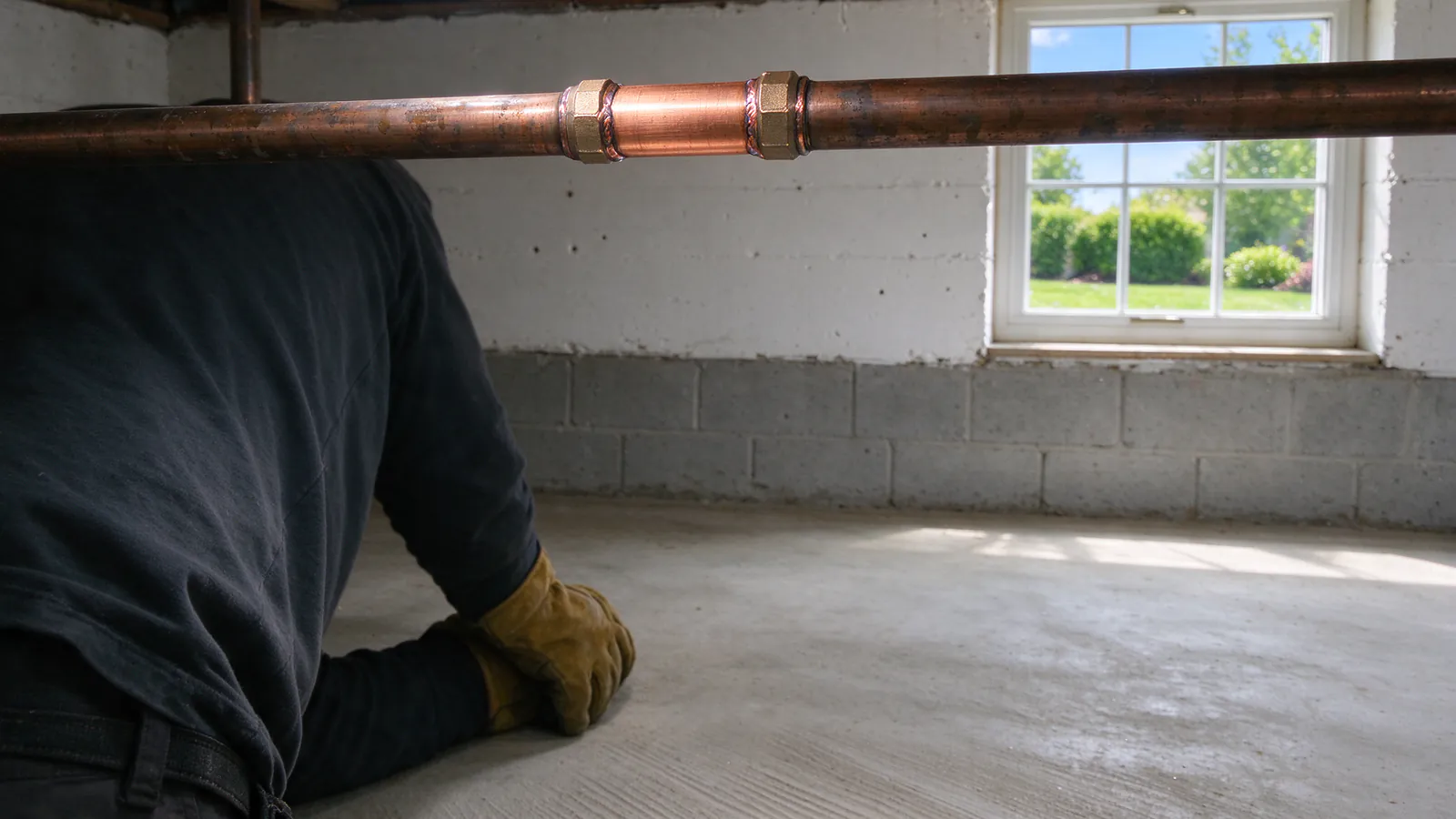
Repair when the leak is a one-off in pipe that is otherwise sound. Repipe part of the house when one area is clearly worse. Repipe the whole house when the pipe is failing in several places, when galvanized runs throughout, or when flow is poor at several fixtures. The pattern decides, not a single leak.
Slate Repiping Columbus offers and manages pipe repair, partial repiping and whole-house repiping across Columbus and nearby Franklin County communities, carried out by licensed and insured plumbing contractors. This guide explains how to tell which one a house needs.
Three options, side by side
| Spot repair | Partial repipe | Whole-house repipe | |
|---|---|---|---|
| What is replaced | The leaking section | A defined part: one bath group, one floor, the hot side, one run | Every hot and cold line from the main shutoff |
| Fits when | One leak in otherwise sound pipe | One area is clearly worse, or the budget has to be staged | Leaks in several runs, galvanized throughout, low flow at several fixtures |
| Openings | One, at the leak | Along the replaced section | Planned for the whole house at once |
| Old pipe left in service | All of it | Everything outside the boundary | None, apart from pipe capped and abandoned |
| Permit | Depends on the repair and the office | Plumbing permit | Plumbing permit |
| Cost | Drivers only: access, location, finish | Drivers only: length, fixtures, openings | Typical Columbus-area range $4,000 to $15,000+ |
Larger multi-bath, copper or complex homes can run above the whole-house range. The Columbus repipe cost guide explains what sits inside that number.
Leak detection comes first
A repair-or-replace decision is only as good as what is known about the leak. Finding the leak, the material it is in, and the condition of the pipe around it comes before any recommendation. For a hidden leak, that may mean water leak detection: listening, pressure testing sections, thermal imaging, or opening the most likely spot.
Once the leak is found, three questions shape the answer:
- What material is it? Galvanized, copper, polybutylene and CPVC fail in different ways. The pipe identification guide covers how to tell them apart.
- Where on the pipe is it? At a joint, or in the wall of the pipe itself.
- What does the rest of the run look like? Rust at nearby threads, green crust along copper, or pipe that looks sound for its age.
Joint leaks vs pipe-wall leaks
The location of a leak is one of the clearest clues.
A leak at a joint often traces to how that joint was made or what it has been through: a soldered joint with flux left inside, an overheated or under-heated joint, a fitting that was never tight, a threaded joint that has been disturbed, or a polybutylene fitting that has cracked. If the pipe on either side is sound, rebuilding the joint is a real repair. Installation defects tend to fail one joint at a time, though a whole system installed the same way can show the same problem in several places.
A leak through the wall of the pipe means the metal itself has thinned. In copper that is usually a pinhole; in galvanized it is corrosion breaking through, often at the threads where the wall is thinnest. A wall leak raises the question of what the rest of the run looks like inside. A section cut out during repair answers it: if the inside is pitted or scaled along its length, the next leak is already forming. The copper pinhole leak guide covers how to read that pattern.
Repair or repipe?
A walk-through traces the pipe from the meter and looks at the leak history before recommending either.
When repairs stop making sense
Repeated plumbing failures follow a curve. Each repair fixes one spot, but the pipe around it keeps aging, so the time between leaks tends to shrink. Repairs stop making sense when:
- leaks repeat in the same run, especially in copper or galvanized;
- leaks appear in several runs, on both hot and cold;
- every repair means opening a finished wall or ceiling, so the cost of access and patching is paid again each time;
- disturbing the old pipe causes the next leak, which happens with galvanized threads near a repair;
- water damage is building up, with ceiling stains, swollen trim or flooring to replace; or
- flow is low at several fixtures, which a spot repair will not change.
The owner’s own history is useful here. A house with two repairs in six months on the same copper system is in a different place from one with two unrelated drips twenty years apart.
By material
Galvanized steel rarely makes sense to keep repairing piece by piece once leaks start, because the threaded joints around a leak are usually just as old and just as thin. Copper often does make sense to repair once or twice, until a pattern appears. Polybutylene fails at its fittings, and because the whole system shares the same weakness it is usually replaced as a system; see polybutylene pipe replacement. CPVC can become brittle with age, so a repair can crack the pipe next to it; the CPVC guide covers that.
Repipe vs reroute
A reroute abandons one failed line and runs a new one on a different path, usually through a wall, ceiling or basement instead of under a slab or through a hard-to-reach space. It is a kind of partial repipe and often fits a slab leak in a house whose other lines are sound. Like any partial job, it leaves the rest of the old system in service, and the scope should say so plainly.
Partial repipe: where the boundary goes
A partial repipe is a real middle ground when one area is clearly worse. Common boundaries include a single bathroom group, the hot side only, one floor, or the galvanized section left in a laundry area after earlier work replaced the rest. The scope should list exactly what is replaced, where the new pipe joins the old, and which old pipe remains. A partial repipe does not make the house fully repiped, and a buyer’s inspector will ask about the pipe that stayed.
Timing the decision
Some moments make the choice easier:
- A kitchen or bath remodel opens walls anyway; see repiping during renovation.
- City service line work inside Columbus opens the basement wall near the meter.
- A sale puts an inspector’s eyes on the pipe. Buyers and sellers often argue over whether one leak means all the pipe needs replacing; a written scope and price turns that into numbers. The guide to buying a house with old pipes covers that negotiation.
Pipe lining is sometimes offered as another option between repair and repipe. It has its own limits and questions, covered in the pipe lining vs repiping guide. To start with your own house, try the repiping assessment.