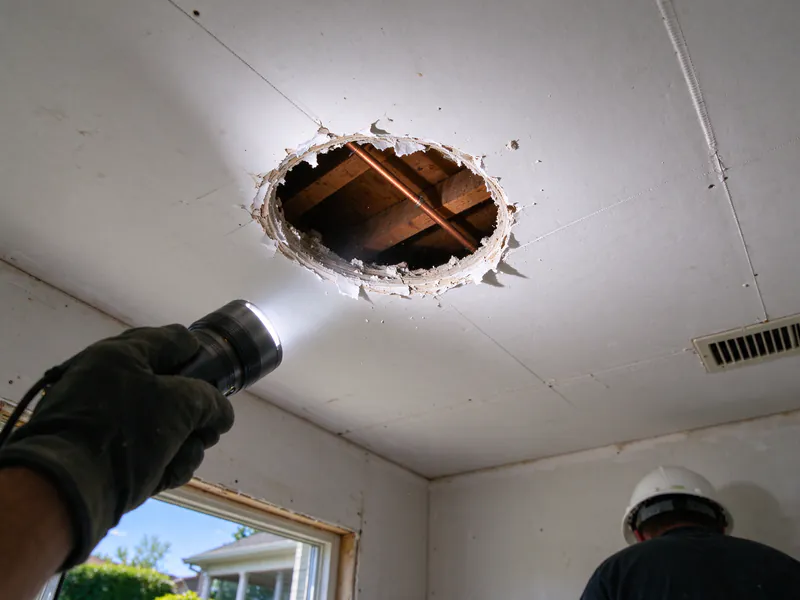
Slate Repiping Columbus provides water leak detection for houses and small buildings in Columbus and nearby Franklin County communities, finding supply leaks that are hidden in walls, floors and ceilings. Detection comes first when you suspect a leak but cannot see it: the bill jumped, the meter keeps turning with every tap closed, a floor feels warm or water can be heard when the house is quiet. The goal is to narrow the leak down before anyone opens a wall, so the opening is in the right place. The work is carried out by licensed and insured plumbing contractors.
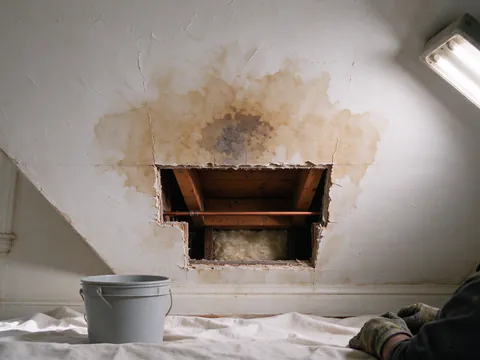
If the leak is already visible, as a ceiling stain, a wet wall or water on the floor, the page on calling a plumber for water leaks is the better starting point. Detection is for the leak you cannot find yet. If water is actively coming through a ceiling or a pipe has split, shut the main and treat it as an emergency pipe repair; emergency calls are answered around the clock.
Signs that point to a hidden supply leak
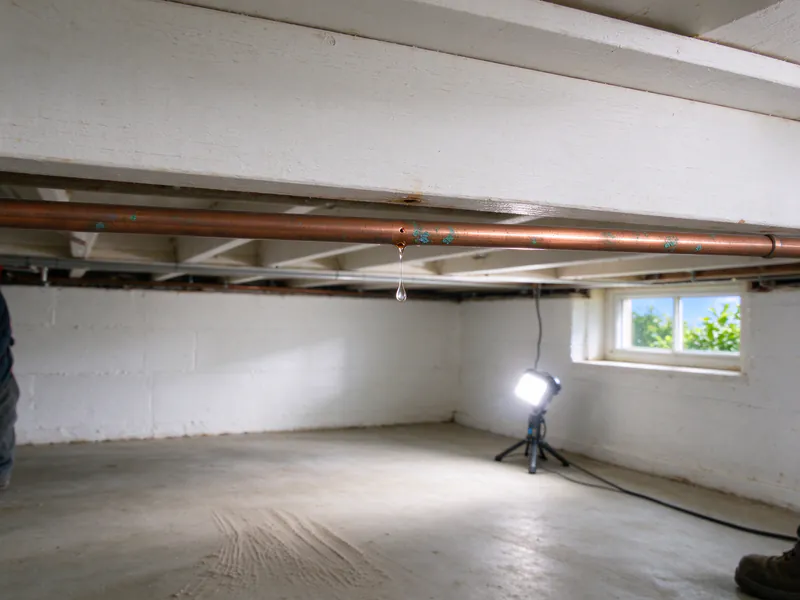
A hidden leak on the supply side is under constant pressure, so it runs whether or not anyone is using water. That is what separates it from a drain leak, which only leaks while a fixture drains. The signs tend to be:
- A water bill that rose with no change in how the house uses water.
- A meter that moves with every fixture and appliance off.
- The sound of running water in a wall or floor when nothing is on.
- A warm spot on a floor, which often means a hot-water line leaking below it.
- Damp drywall, lifting floor finish or a musty smell that does not go away.
- The water heater cycling more often than it used to.
- Water after a cold snap, since freezing can crack a hidden line that only leaks after it thaws; burst pipe repair covers that case.
None of these proves a supply leak by itself. A bill can rise from a running toilet. A damp patch under a shower can be a failed pan or a drain leak. A musty basement can be groundwater. Testing sorts that out.
Step one: the meter test
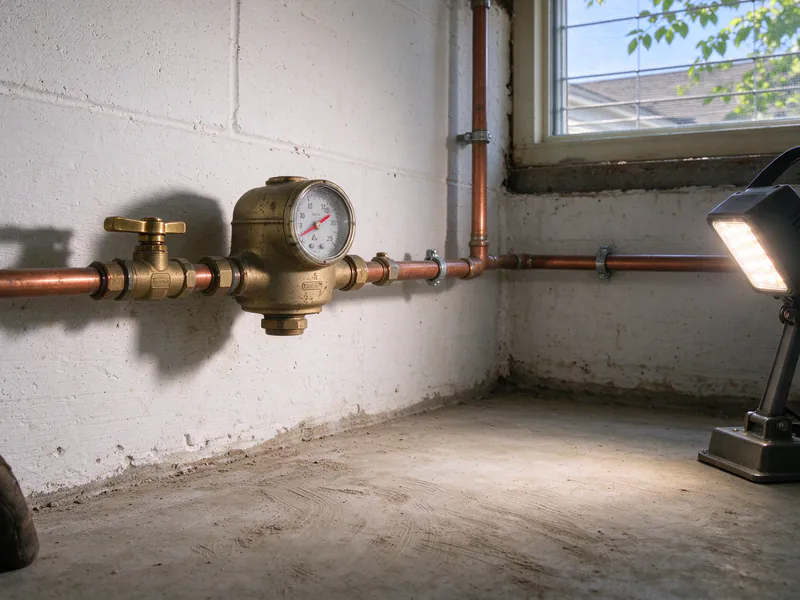
The first test needs no equipment. With every fixture, appliance, ice maker and softener off, the water meter should stop. In most Columbus houses the meter is inside, in the basement near where the service line comes through the wall. Many meters have a small low-flow indicator, a dial or triangle that turns with even a slight flow. If it moves, water is leaving the system somewhere downstream of the meter.
A slow leak may not show in a few minutes, so a second reading an hour or more later, with nothing used in between, catches it. The same test done with the house’s main shutoff closed separates the house from the stretch of pipe between the meter and the valve.
Rule out the common internal leaks
Before looking inside walls, the usual suspects are checked. Toilets are the most common: a flapper that does not seal leaks silently into the bowl, and dye in the tank shows it. A water heater relief valve dripping into a drain, a softener stuck in a regeneration cycle, a humidifier feed or a hose bibb left cracked open can all move the meter. EPA’s WaterSense program runs Fix a Leak Week every March around exactly these leaks, and the Fix a Leak Week post covers them.
Meter moving with everything off?
Note how much it moves and over how long. That reading is the first clue to where the leak is.
Isolation and pressure tests
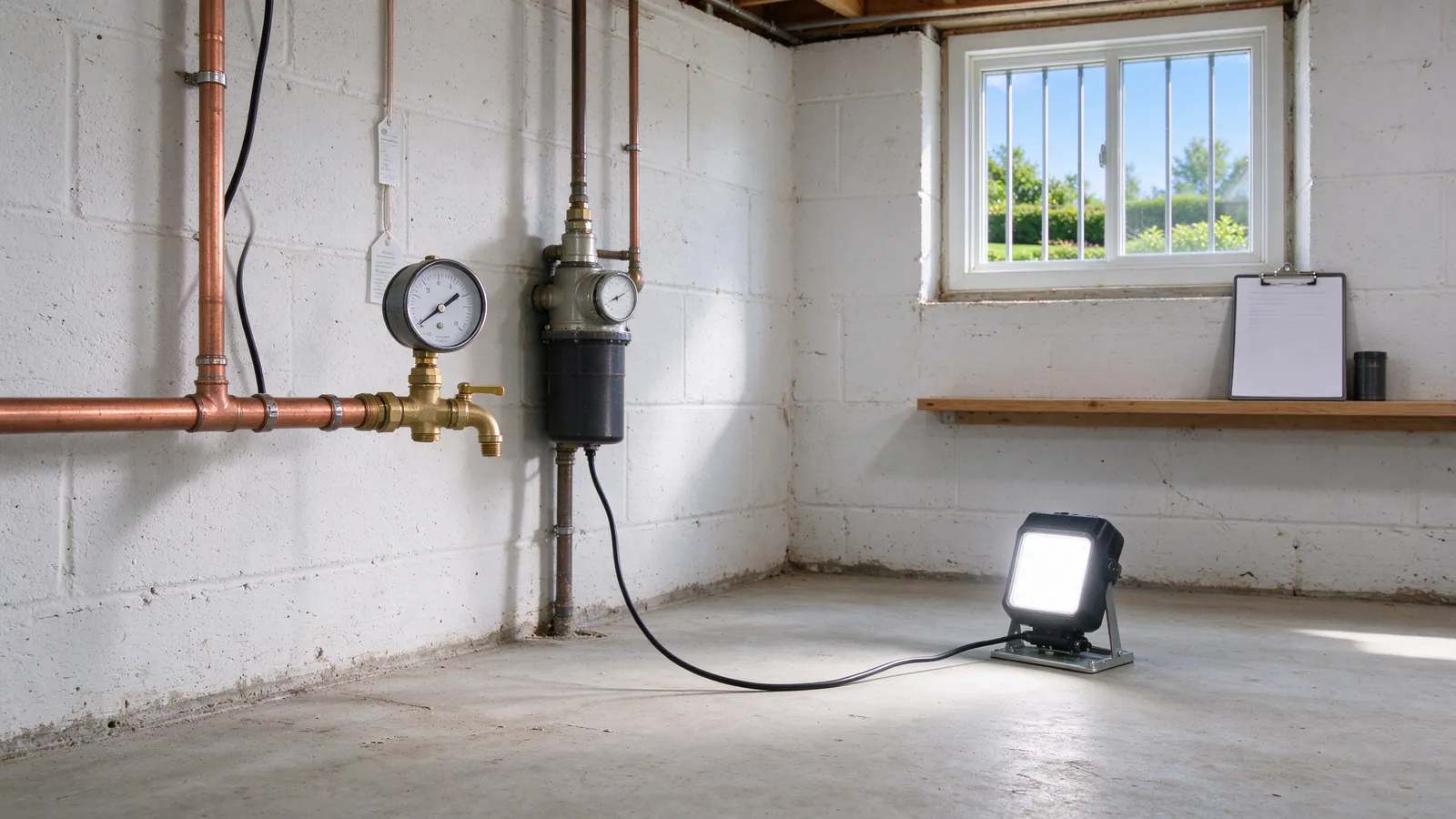
Once the obvious leaks are ruled out, the system is split into parts. Shutting the cold supply into the water heater separates the hot side. Closing branch valves, where a house has them, separates fixture groups. A pressure gauge on an isolated section shows whether it holds: a section with a leak loses pressure over time, while a sound one holds steady. Step by step, the leak is narrowed to one part of the house.
This is where old valves cause trouble. A gate valve that has not been turned in decades may not close fully, or may start leaking at the stem once it is moved. A test is only as clean as the valves it depends on, which is one reason a new main shutoff often becomes part of the pipe repair that follows.
The service line is its own case
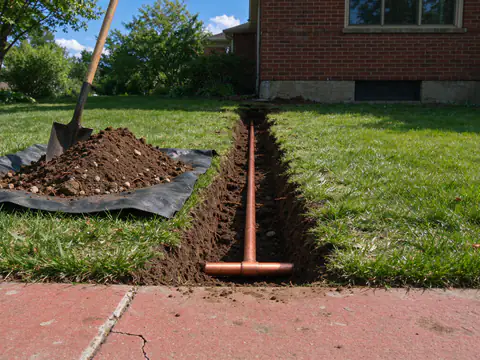
If the meter moves with the house’s main shutoff closed, the leak may be on the service line side. A leak on the buried line outside the house, between the curb and the meter, is a different job: water line replacement covers it, and in Columbus work on the City’s service pipe requires a City of Columbus water contractor license.
Listening, thermal and moisture methods
Once the leak is narrowed to a section, other methods can help locate it more closely. These are described here as the general approaches used in the trade, not as a list of equipment any one contractor keeps on the truck.
- Acoustic listening uses a sensitive microphone on the floor, wall or pipe to hear the hiss of water escaping under pressure. It works well on metal pipe and larger leaks, and less well on plastic pipe, small leaks or in a noisy house.
- Thermal imaging shows temperature differences on a surface. A leaking hot-water line warms the floor or wall around it, which makes it stand out. Cold-water leaks are much harder to see this way.
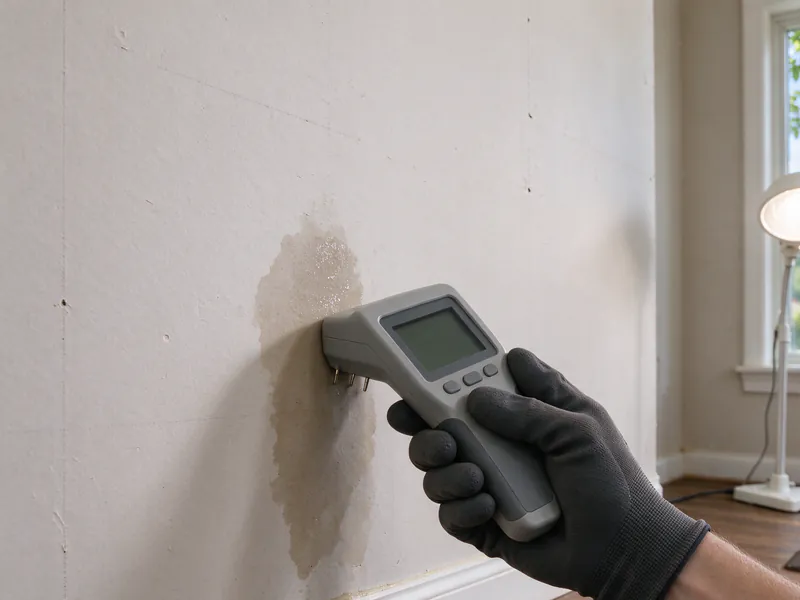
- Moisture meters read dampness in drywall, wood and some flooring, to map how far water has spread.
- Tracer gas, a harmless gas pushed into a drained line, is used in some cases where water-based methods struggle.
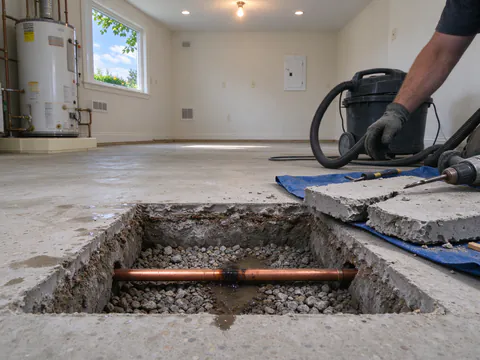
For leaks under a concrete floor, these methods often work together; slab leak repair covers what happens once one is found.
What detection cannot prove
Leak detection gives a location with a level of confidence, not a guarantee. It helps to know its limits before the first opening is made:
- Water travels. Moisture readings show where water collected, which may be several feet from the leak, especially along a joist or down a stud bay.
- Small leaks hide. A slow seep on a cold line can be nearly silent and show no temperature change.
- Intermittent leaks may not leak during the test. A joint that only weeps when hot water runs, or one that opens in a cold snap, can pass on the day.
- A sound test is not a condition report. A section that holds pressure today can still be close to failing. The copper pinhole leak guide and the repipe vs repair guide cover how to judge what the leak says about the rest of the pipe.
- Drain leaks are separate. Supply tests do not find a leaking drain, shower pan or toilet seal, and the guide to whether repiping includes drain pipes explains why the two systems are handled apart.
What detection depends on
There is no set price for leak detection. It depends on how much testing it takes to narrow the leak down: whether the meter test and common internal checks find it, how many sections have to be isolated, whether the house has working branch valves, and whether listening or thermal methods are needed. Water damage found along the way may involve insurance, and the homeowners insurance guide explains how a sudden leak and wear are usually treated differently.