Galvanized steel is the gray, threaded pipe that plumbed most Columbus houses built before the middle of the last century, and a lot of it is still carrying water. Slate Repiping Columbus replaces galvanized water pipe inside homes in Columbus and the nearby Franklin County suburbs, with new PEX or copper run from the main shutoff to the fixtures. The work is carried out by licensed and insured plumbing contractors under the plumbing permit for the address.
The housing stock explains why this comes up so often here. Census figures put 12.0% of Columbus homes before 1940, but the share climbs past half in the 43205 and 43206 ZIPs on the near east and south sides, and above 40% in Bexley and Grandview Heights. Galvanized pipe that has not already been replaced is usually somewhere in those houses, even where an earlier owner switched part of it to copper. Most owners end up choosing a whole-house repipe, and some start with a partial repipe of the worst section.
How to tell the pipe is galvanized
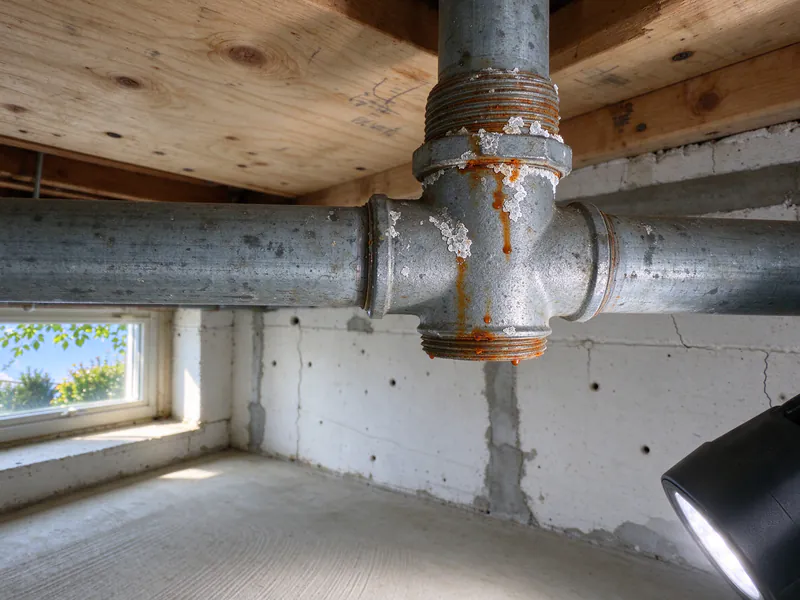
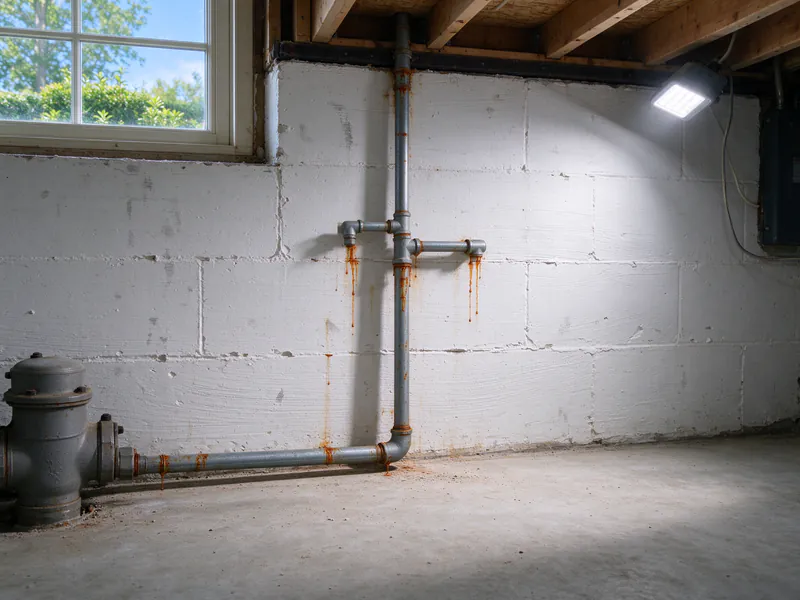
Galvanized pipe is dull gray or silver steel with threaded joints: the pipe screws into each fitting, and the threads often show a ring of rust where they meet. A magnet sticks to it firmly, which it will not do on copper or plastic. Lead pipe, which can also look gray, is soft and shows a bright silver scratch when scraped with a key, while steel does not. The guide to identifying pipe material has photos and a step-by-step check.
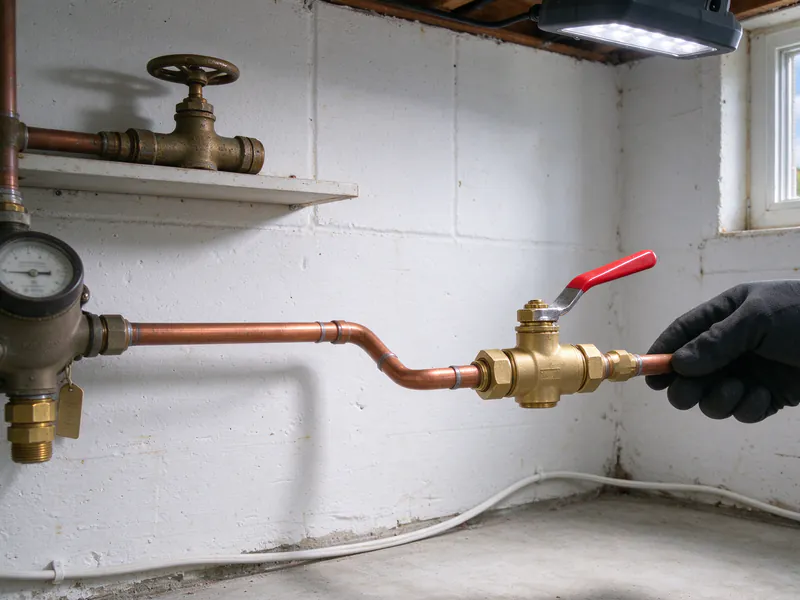
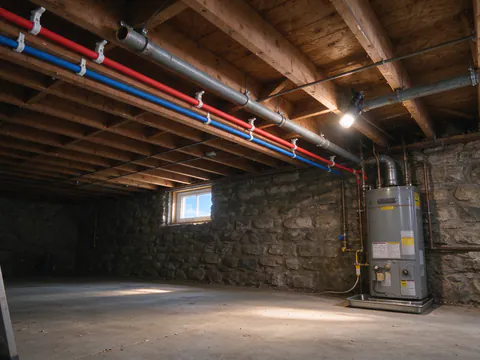
The best place to look is the basement near the water meter, where the service line enters and the house main begins, then along the ceiling and up to the water heater. Many houses show a mix: steel near the meter, a copper section where a leak was once fixed, then steel again above.
How galvanized fails from inside
Galvanized pipe is steel coated with zinc. The zinc protects the steel for years, then wears through, usually first along the bottom of horizontal runs and at the threads. Once bare steel is in contact with water, it rusts.
Scale and tuberculation
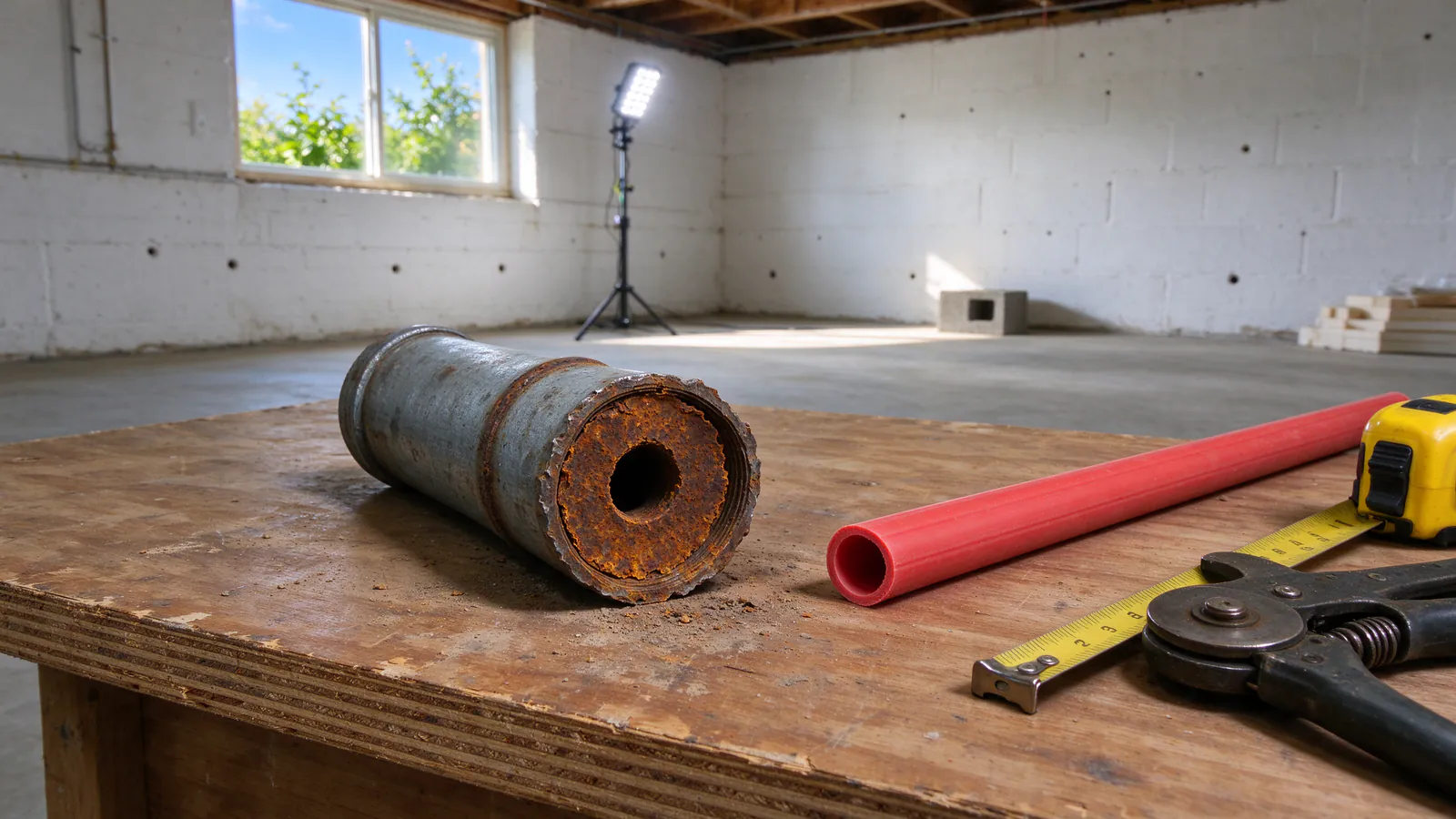
Rust and minerals build on the inner wall in rough lumps, a pattern called tuberculation. The bore narrows a little each year. A half-inch pipe can be choked to a fraction of its opening while the outside looks sound, which is why an owner can be told the pipes look fine and still have a shower that weakens every time a toilet refills.
Why flow drops before anything leaks
Narrow pipe resists flow. One fixture alone may seem acceptable, but when two run at once there is not enough capacity, and the upstairs fixtures, which are furthest from the main, lose first. Leaks usually come later and come at threaded joints, where cutting the threads left the thinnest wall. A corroded nipple at the water heater or a weeping fitting in the basement ceiling often signals the condition of steel elsewhere. Even so, weak flow alone does not prove the pipe is the cause. A half-closed valve, a failing pressure-reducing valve, clogged aerators or a restricted service line can look the same, and the low water pressure page covers how those are ruled out.
Rusty water: the pipe, the heater or the street
Brown or orange water is the other common sign. If it shows on both hot and cold, mostly in the morning or after a trip, and clears after running, interior steel is a likely source. If it shows only on hot, the water heater may be the source. If the whole street sees it at once, work on a City main can stir up sediment. The rusty water guide walks through how to tell them apart, and the guide to whether galvanized pipes are safe covers the drinking-water side.
Steel pipe in the basement?
A walk-through traces every galvanized run and shows what is already copper or plastic.
The pipe inside versus the service line
Galvanized can be in two places, and they are separate jobs. The house piping runs from the main shutoff to the fixtures and belongs to the owner. The service line is the buried pipe from the water main to the house. The City of Columbus stopped allowing new lead or galvanized service lines in December 1963, and its public inventory lists 8.1% of service lines inside the City with galvanized pipe on the owner’s side. In Grandview Heights, also on the Columbus system, the share is 31.0%.
The City’s lead service line program replaces lead and galvanized service lines on both sides, street by street over about twelve years, at no direct cost when the scheduled work reaches a street, while funding lasts. Its LEAP program offers a 0% deferred loan of up to $10,000 for owners who replace a line sooner. Neither program touches the pipe inside the house. The Columbus lead service line program guide and the lead service line replacement page explain how the two can be sequenced so the new interior pipe is not fed by an old service line for long.
Galvanized to PEX or copper
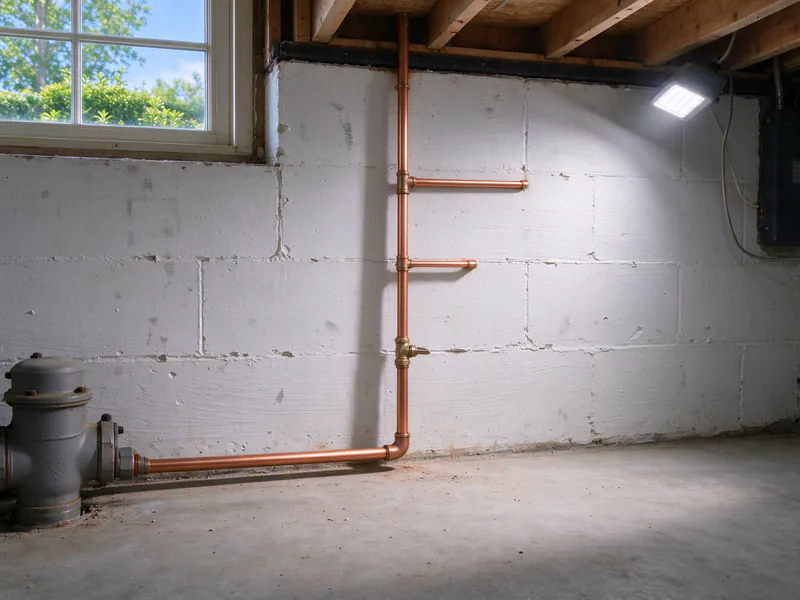
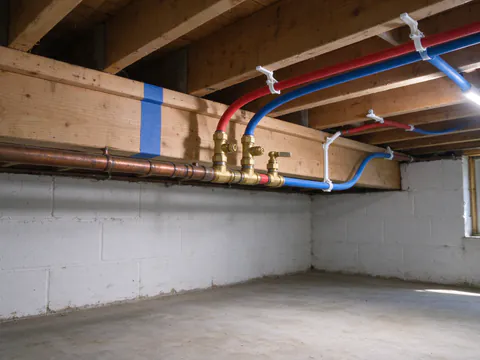
Both replacement materials are allowed under the Ohio Plumbing Code. PEX repiping suits houses where the old steel climbed through plaster walls, because the tubing can be fished through without opening every bay. Copper repiping suits owners who want metal pipe and runs that stay exposed. Whichever is chosen, the new pipe is sized for the fixtures it feeds rather than copied from the old steel.
The cutover: transitions, loose scale and cleanup
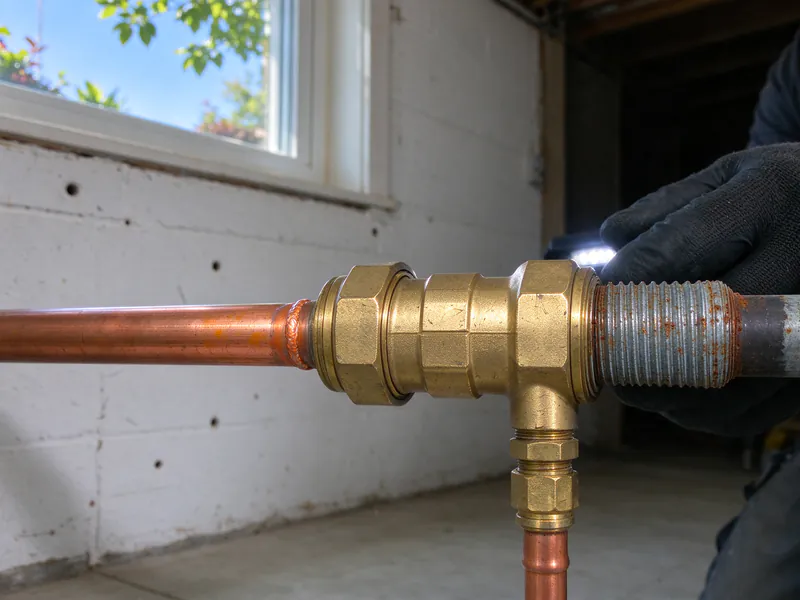
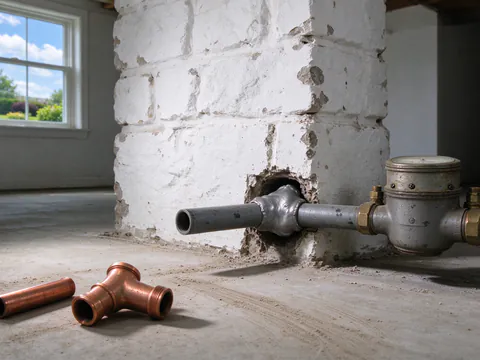
Galvanized replacement has a few steps a copper-to-PEX job does not. Water is shut off in stages and new lines are run while the old ones still serve the house. Where new pipe meets steel that stays, such as a short section at the meter side, a dielectric or listed transition fitting keeps the metals apart. Old pipe that can be reached is removed; pipe buried in plaster or between floors is cut, capped and left.
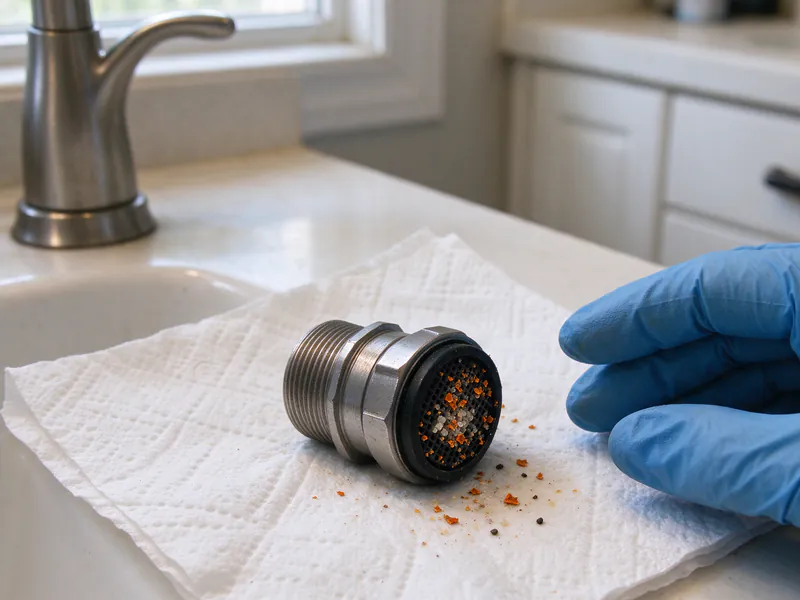
Disturbing old steel loosens scale. After cutover, flakes can lodge in aerators, showerheads, toilet fill valves and single-handle faucet cartridges. A flush of the new system, followed by cleaning those strainers, is part of the scope. If fixture flow is still weak after the flush, a clogged cartridge is a common reason.
Permit, testing and price
Replacing galvanized water piping needs a plumbing permit. Inside the City of Columbus, Building and Zoning Services issues it at $275 for a 1, 2 or 3 family home with two inspections. In most suburbs the city issues the permit and Franklin County Public Health reviews the plan and inspects. Before walls close, the new piping is pressure tested and checked, then flushed.
Price follows the scope. A galvanized house repiped throughout falls in the typical Columbus-area range for a whole-house repipe, $4,000 to $15,000 or more, with larger multi-bath, copper or complex homes running higher. The repipe cost guide shows what moves it, and the guide to buying a house with old pipes covers galvanized found during a sale.