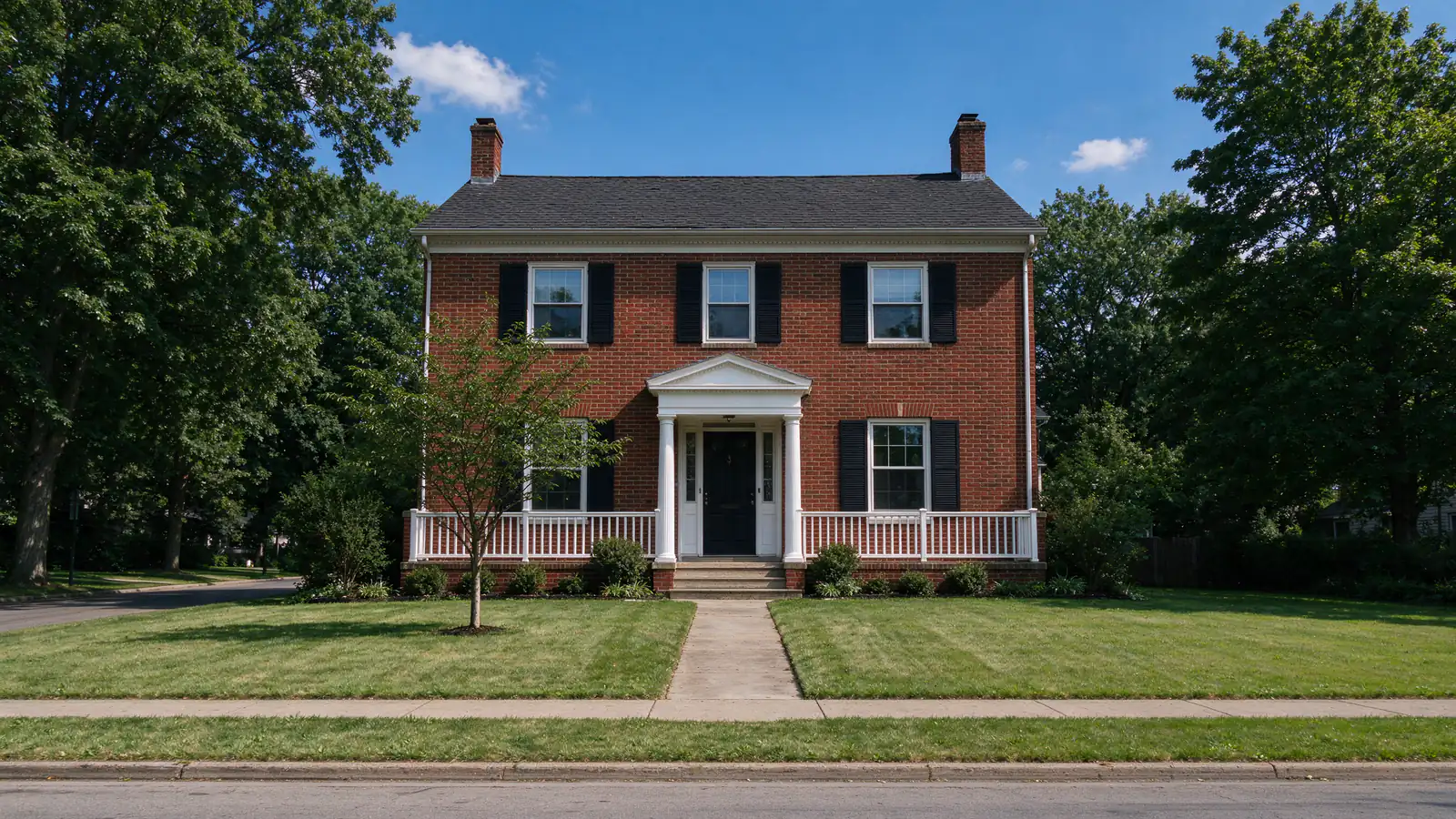
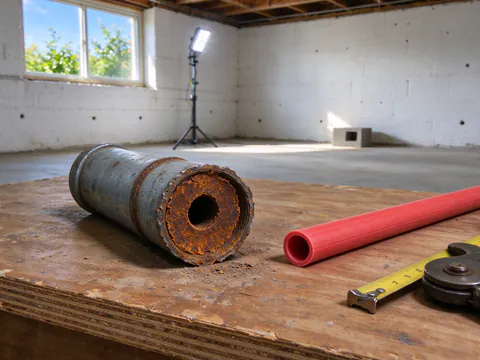
A repipe in Upper Arlington passes through two public offices before the first wall is opened. Slate Repiping Columbus builds both steps into its plan: it offers whole-house and partial repiping in Upper Arlington, in PEX or copper, and settles the paperwork before any demolition. From Old Arlington south of Lane Avenue to the streets around Northam Park and Tremont Road, licensed and insured plumbing contractors carry out the work.
That permit path is the first thing that sets Upper Arlington apart from the Columbus neighborhoods next door. The second is the housing. On Census figures, 43.0% of the city’s homes were built between 1940 and 1959 and another 29.4% between 1960 and 1979, with a median year of 1959. That puts most houses in the copper era, with an older layer of galvanized in the first postwar streets and the original plat.
Two offices, one permit
The City of Upper Arlington issues the plumbing permit. Its building division states that a plumbing permit is required any time supply or waste lines are added, altered or removed, so a full or partial repipe is covered. Franklin County Public Health handles the plumbing side under its contract with the City: it reviews the plans and sends the plumbing inspector. Since February 9, 2026, the City’s application has to include FCPH’s plan review approval, and the fixture count on the two must match.
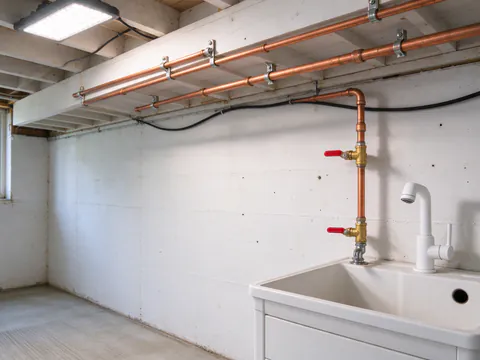
In practice that means the scope has to be settled before the application goes in. Every fixture on the plan counts, including hose bibbs, the water heater connection and any new laundry or bar sink. Adding a fixture after review means going back to FCPH. Plumbing contractors working in Franklin County also register every year, and an owner may do their own plumbing only in a home they live in. The repiping permit guide compares this sequence with the City of Columbus process, and it is worth confirming current fees and the contract with the building division at application.
Basements, crawlspaces and one-story layouts
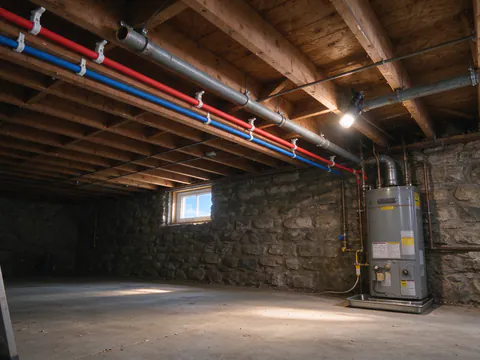
The County Auditor’s dwelling records for Upper Arlington show 61.5% of homes with a full basement and 29.3% with some crawlspace, including houses that are part basement and part crawl. Close to half, 48.5%, are one story. Those numbers shape the route more than anything else here.
A full basement under a one-story house is the simplest case: the new main runs along the joists and each branch rises through the floor under its fixture. Where part of the house sits over a crawlspace, the lines that cross into it need their own access plan. Crawlspace work is slower and the old pipe there is the hardest to inspect, which is one reason a scope should say how the crawl side is handled rather than assuming it matches the basement. The how invasive is repiping guide explains how openings are placed and patched in finished rooms.
Getting the fixture count right
A walk-through lists every fixture and connection the new piping will serve, so the plan FCPH reviews matches the permit the City issues.
Mid-century copper and the galvanized layer
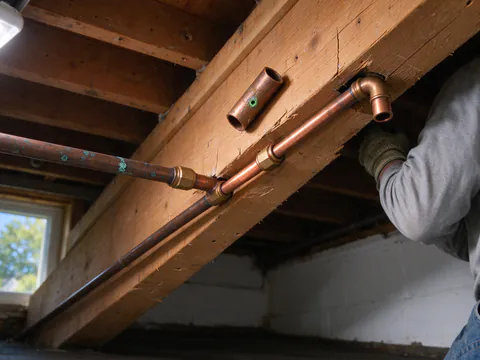
Copper installed in the 1950s and 1960s is now well past sixty years old in many houses. Age alone does not condemn it, and Columbus treats its water with a zinc orthophosphate corrosion inhibitor. Still, the first pinhole in an old copper line raises a fair question: is it a single weak spot or the start of a pattern? A repair, a pressure test and a look at the condition of nearby runs answer that better than the age of the house. The copper pinhole leaks guide covers what to check, and copper pipe repair handles the single-leak case.
Galvanized is less common than in the city’s older neighborhoods but not absent. The service line inventory for Upper Arlington shows 7.7% of lines galvanized on the owner’s side and 948 records marked as galvanized requiring replacement. Older houses in the first plat, and some early postwar houses, are the likeliest to have galvanized inside as well, sometimes with copper spliced in where a leak was fixed. The PEX vs copper guide helps with the material choice if a repipe is the answer.
The County Auditor’s permit descriptions also show 27 repipe-type permits in Upper Arlington since 2020, the most of any suburb in that file. Reporting differs from city to city, so the number shows that repipes happen here rather than how often.
Old Arlington, south of Lane Avenue
Part of Upper Arlington south of Lane Avenue is a designated historic district, known for its Colonial and English Revival houses. The City’s historic rules, as it describes them, are aimed at demolition rather than interior work, and a repipe stays inside the house. Anything that changes the exterior, such as a new wall hydrant on a front elevation, is worth asking the City about first.
Columbus water, without the City’s schedule
Upper Arlington is a full-service contract community: Columbus Water & Power supplies the water and sends the bill. That makes owners here eligible for LEAP, the City’s 0% deferred loan of up to $10,000 for replacing a lead or galvanized service line, with three quotes and a three-party agreement signed before work starts. The City of Columbus street-by-street replacement program is a different matter, and Columbus says customers outside its limits will be notified by their own municipality. Its project map shows only 31 signed work agreements inside Upper Arlington. The water line replacement page covers private service line work.
What a repipe costs here
Square footage, the number of baths and any crawlspace sections push a project up the typical Columbus-area range of $4,000 to $15,000+ for a whole-house repipe, and larger multi-bath, copper or complex homes run higher. A compact one-story over a full basement sits lower. The Columbus repiping cost guide explains each driver.
Neighboring areas
To the southeast, Grandview Heights has the same County plan review and an older galvanized-heavy housing stock. Across the Olentangy, Clintonville follows the City of Columbus permit, and further south the Hilltop is where the City’s line program is most active. More communities are on the service areas page.