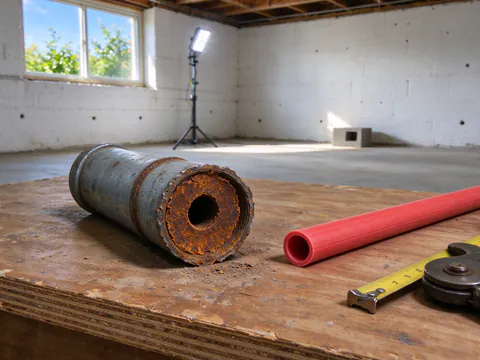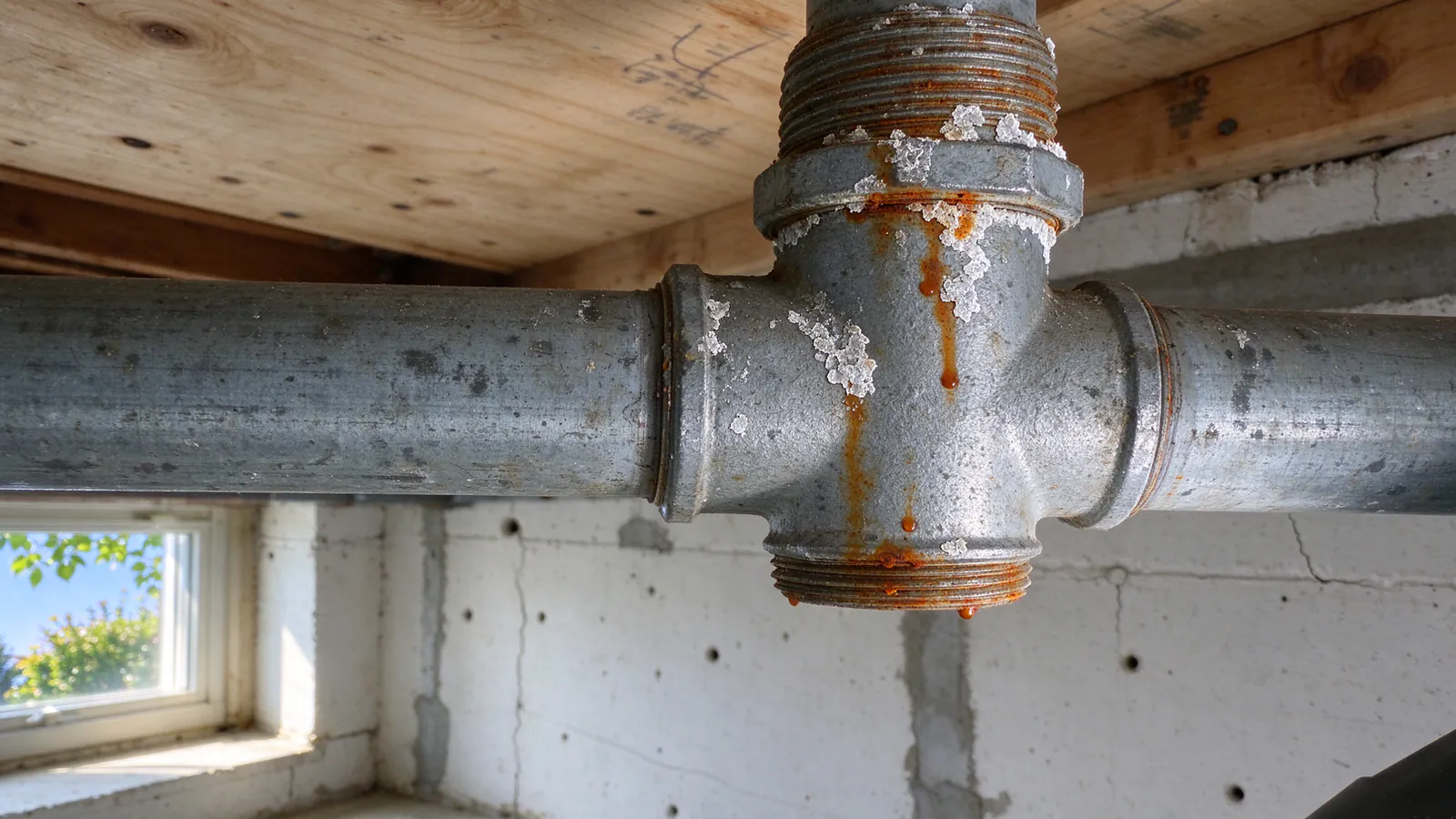
Galvanized pipe is not lead pipe, but it is not risk-free either. The US EPA says galvanized steel that sits, or once sat, downstream of a lead service line can collect lead in its corrosion scale and release it into water later. Old galvanized also restricts flow and sheds rust as it corrodes.
Slate Repiping Columbus offers and manages galvanized pipe replacement in Columbus and nearby Franklin County communities, carried out by licensed and insured plumbing contractors. This guide covers the lead question, the everyday problems, and how Columbus’s service line program fits in.
How galvanized pipe picks up lead
Galvanized pipe is steel dipped in zinc to slow rusting. Over decades the zinc wears through and the steel corrodes, building layers of rust and mineral scale on the inside wall. That scale is porous. When water passes through a lead pipe first, small amounts of lead travel downstream and can bind into the scale of the galvanized pipe after it.
The lead does not stay put. According to the US EPA, galvanized pipe that was downstream of a lead service line or a lead connector can keep releasing lead even after the lead pipe is gone. Changes in water chemistry, a disturbance during plumbing work, or scale breaking loose can each send it into the water.
The same mechanism applies inside a house. Where the service line was lead and the interior pipe is galvanized, the first runs of steel pipe in the basement sat downstream of that lead for decades. Replacing only the service line does not clean what the interior scale has already absorbed.
“Galvanized requiring replacement”
The EPA’s Lead and Copper Rule Improvements, finalized in October 2024, require water systems to identify and replace lead service lines within 10 years. The rules also cover galvanized service lines that are or were downstream of lead. Those are listed as “galvanized requiring replacement”, and water systems must treat them like lead lines. The EPA’s rule page sets out the requirements.
Columbus’s public service line inventory shows how common they are. Across the City system and its full-service contract areas, about 17,900 lines carry the “galvanized requiring replacement” status, alongside about 23,500 listed as lead. The share varies by place:
| Area | Lines listed “galvanized requiring replacement” | Customer-side galvanized |
|---|---|---|
| Grandview Heights | 27.8% | 31.0% |
| ZIP 43205 (Olde Towne East, Near East, Driving Park) | 22.9% | 23.9% |
| ZIP 43206 (German Village, Merion Village, Schumacher Place) | 22.0% | 21.4% |
| ZIP 43204 (Hilltop, Westgate) | 15.1% | 23.5% |
| Upper Arlington | 7.6% | 7.7% |
These are service line figures from the City’s inventory. They describe the pipe from the street to the house, not the pipe inside it, but a house with a galvanized service line very often has galvanized inside as well.
Rust and color: unpleasant, usually not the danger
Corroding steel sheds iron. Brown or orange water, especially the first draw after the water sits, is the most visible sign of old galvanized pipe. The City of Columbus lists rusty water as a common concern and describes it as an appearance issue that is usually not a health risk.
Rust is still worth taking seriously for what it says about the pipe. It means the steel is corroding inside, and the same corrosion builds the scale that can hold lead. Rusty water can also come from a water heater or City main work rather than house pipe; the rusty water guide shows how to tell which.
Flow: the problem most owners notice first
Scale narrows the inside of galvanized pipe a little every year. A half-inch line can lose much of its opening before it ever leaks. The signs are familiar in older Columbus houses: an upstairs shower that fades when the kitchen tap opens, a toilet that takes a long time to refill, and pressure that seems fine at the hose bibb but weak at every fixture.
A repipe can restore flow that scaled pipe has choked off, but low flow has other causes too: a failing pressure-reducing valve, a partly closed main valve, or a restricted service line. The low water pressure page covers how those are separated before anyone recommends new pipe.
Leaks at the threads
Galvanized steel is joined with threads, and threading cuts away part of the pipe wall. Those joints are where corrosion breaks through first. A leak at one threaded joint usually means the others are thinning too. Patching one nipple can buy time, but disturbing old steel can also loosen scale, release a burst of rust, or start a leak at the next joint.
Columbus’s program and where it stops
Inside Columbus, the City’s lead service line program replaces lead and galvanized service lines on both the public and private sides with lead-free copper, street by street over about 12 years. The City intends to cover the cost during scheduled replacement while funding lasts. Outside the schedule, the City puts owner-paid replacement at about $6,000 to $10,000, and its LEAP loan lends up to $10,000 at 0% for service line work by an approved contractor.
The program does not replace interior plumbing. The City says in-home lead hazards are not covered. A house that gets a new copper service line can still have galvanized pipe inside that sat downstream of lead for decades. Bexley buys Columbus water through master meters and keeps its own inventory and loan program, so its owners deal with the City of Bexley rather than the Columbus program.
Do galvanized pipes need to be replaced?
Not overnight, and not always all at once. Replacement makes the most sense when:
- the house had, or still has, a lead service line upstream of the galvanized,
- lab results show lead at the tap,
- flow has dropped at several fixtures,
- threaded joints have started leaking, or
- the service line is being replaced anyway, opening the basement wall near the meter.
Where galvanized remains only in one area, such as a laundry branch, a partial repipe can replace that section. Where it runs through the whole house, a whole-house repipe replaces it from the main shutoff out. The repipe vs repair guide helps sort out which applies.
Buyers face the question too. An inspector’s note about galvanized pipe often shows up in Columbus home sales, and the guide to buying a house with old pipes covers how to price it. To find out what is in your house, start with the pipe identification guide or the repiping assessment.