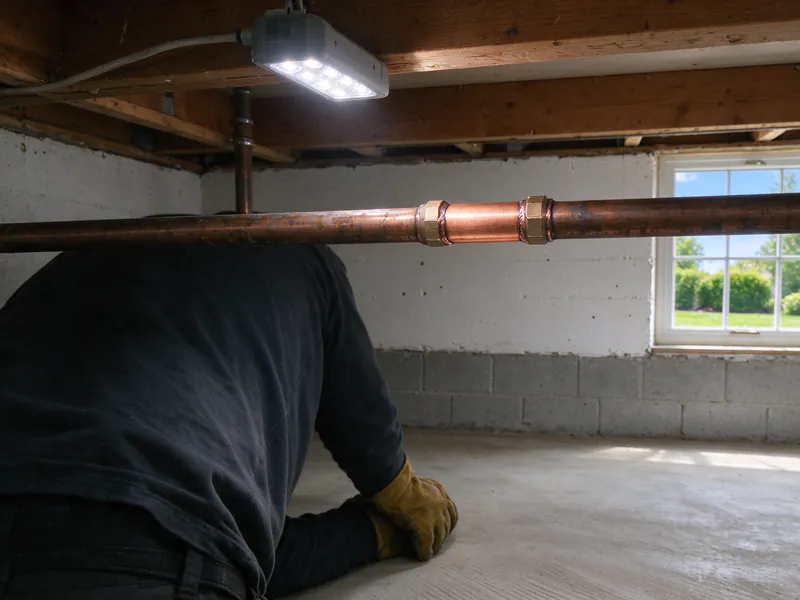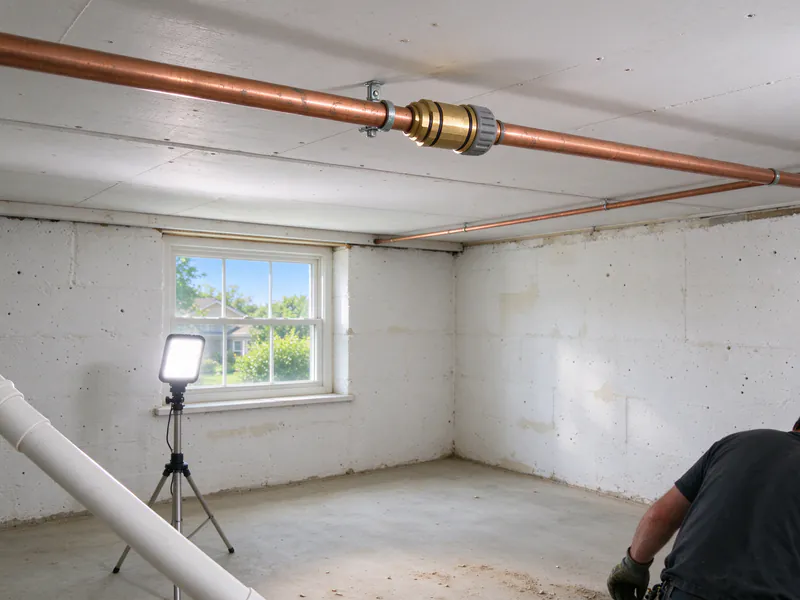
Slate Repiping Columbus repairs leaking water supply pipe in Columbus houses and small buildings and in nearby Franklin County communities, as well as replacing it. A repair takes out one failed joint, fitting or short section and puts in sound pipe, while the rest of the system stays in service. The work is carried out by licensed and insured plumbing contractors, and each repair comes with a plain account of what the pipe around it looks like, because that is what decides whether this is the only repair or the first of several.
This page covers the hot and cold supply lines inside the house. Drains, waste stacks and the sewer are separate systems with separate failures, and the guide to whether repiping includes drain pipes sets out the difference. A leaking buried line between the street and the house is water line replacement, and copper with repeat pinholes has its own page on copper pipe repair.
Joint leaks vs pipe-wall leaks
The first question about any supply leak is whether it is coming from a joint or from the wall of the pipe. The answer changes what the repair is and what it says about the rest of the house.
A joint leak starts where two pieces meet. On galvanized steel that is a threaded fitting, where cutting the threads removed part of the wall when the pipe was new, so rust reaches through there first. On copper it is a soldered joint, which can weep if it was underheated, overheated or never fully filled with solder. On PEX it is a crimp, clamp or expansion fitting, and on CPVC it is a solvent-cemented socket. A single joint that failed because of how it was made can be cut out and remade without saying much about the pipe on either side.
A pipe-wall leak is a hole or split in the run itself: a pinhole in copper, a rust-through in galvanized, a crack in brittle CPVC or a split from freezing. These mean more. A pinhole means the wall wore thin in that spot, and pipe of the same age, alloy and water often wore the same way nearby. A freeze split is the exception, since it has a clear outside cause; burst pipe repair covers that case.
What the cut-out piece shows
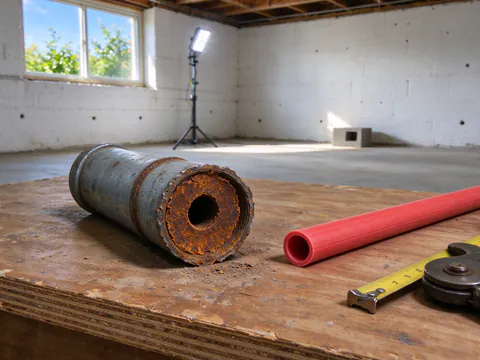
The section removed in a repair is evidence. Galvanized cut open shows how much of the bore is scale. Copper shows whether the inside wall is smooth or pitted. Asking to see it costs nothing, and it is often the most useful thing a homeowner learns from the visit.
Repairs by pipe material
Galvanized steel
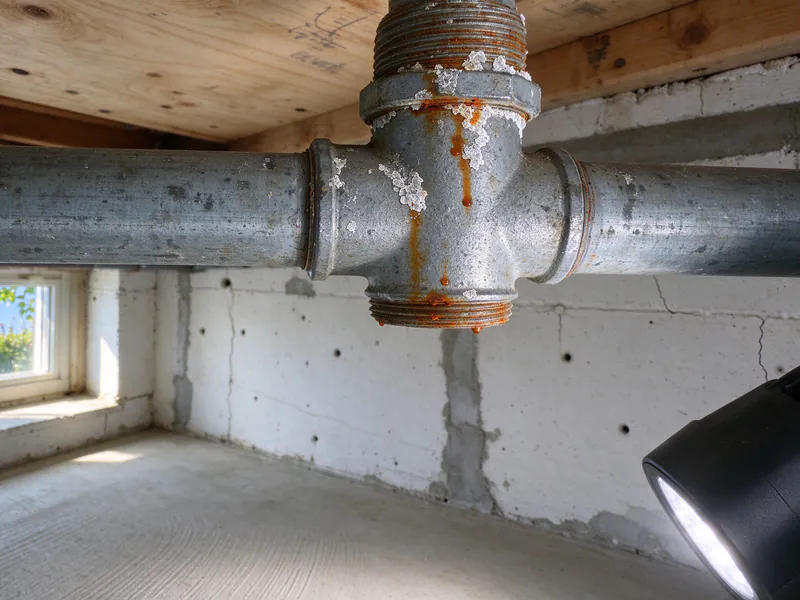
Galvanized is the hardest material to repair well, because the pipe next to the leak is usually close to failing too. Wrenching on a rusted fitting to unthread it can crack the joint upstream. The sound approach cuts the pipe back to a point where the threads or the wall are solid, then joins new copper or PEX to the old steel through a dielectric union or a listed brass transition. Steel joined directly to copper corrodes at the contact point, so the fitting matters as much as the pipe. Columbus banned new galvanized service lines in December 1963, which gives a sense of the age of interior galvanized still in use.
The most common galvanized repair is the short nipple at the top of a water heater or at the meter. Those nipples carry hot water or sit beside a transition, so they rust first, and replacing them is a reasonable repair even in a house that will be repiped later.
Copper
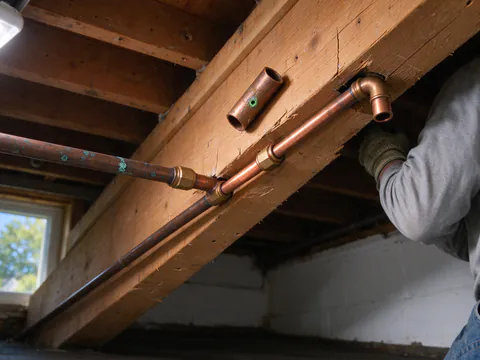
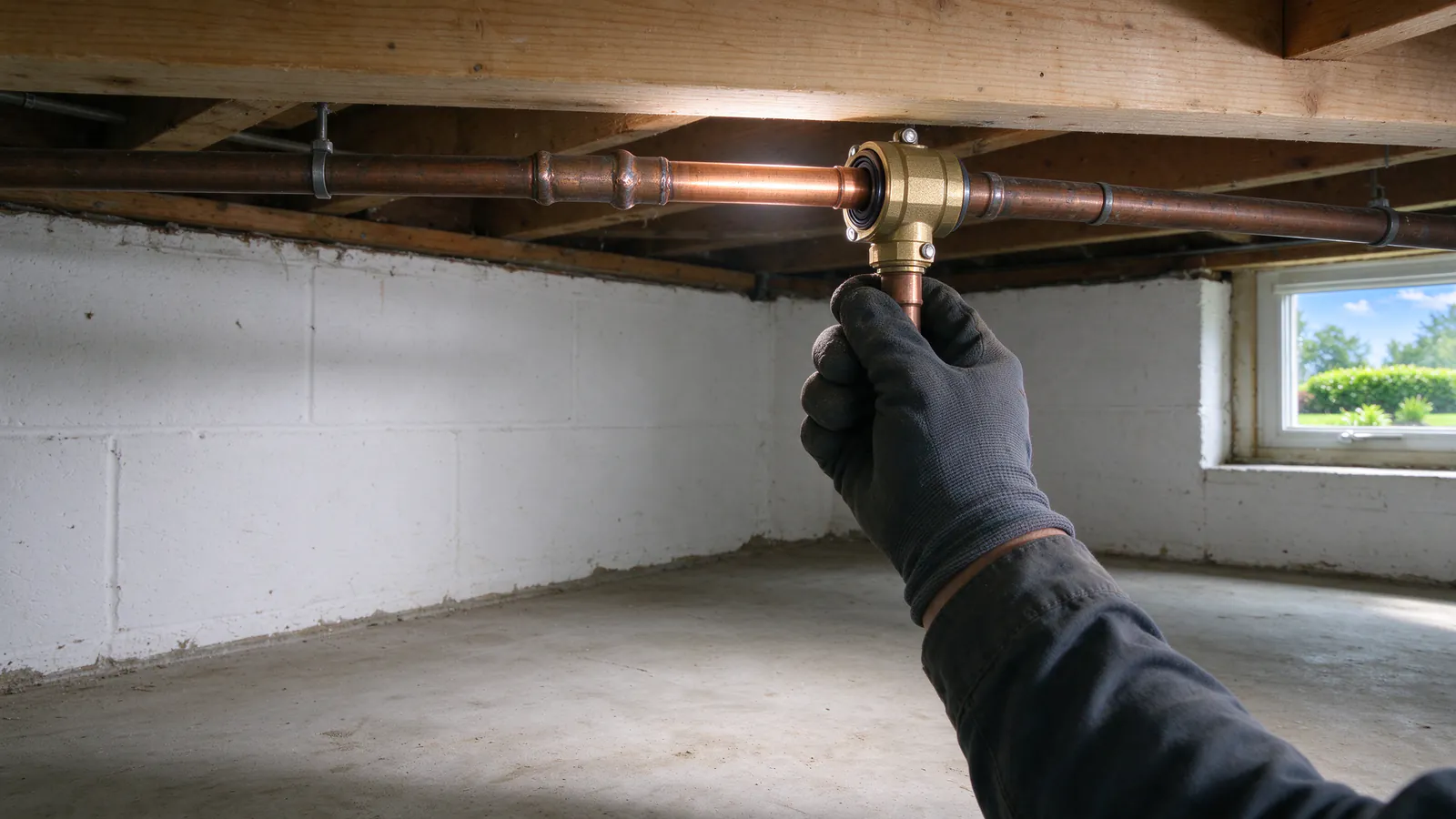
Copper sections are cut out and replaced with new tube joined by lead-free solder or listed press fittings. Press fittings avoid an open flame, which matters next to finished wood, in a tight joist bay or close to old wiring. Where older copper was joined before the 1986 lead solder ban, the repair is a chance to replace a joint that may carry lead, though one new joint does not change the rest. Brass fittings could contain up to 8% lead until 2014, according to the City, so an old brass valve or adapter is usually replaced rather than reused.
PEX and CPVC
PEX leaks are mostly fitting problems: a crimp ring set off-square, a fitting from a different system, or tubing kinked or rubbed through on a sharp edge. The fix replaces the fitting with one listed for that tubing and protects the line from whatever damaged it. CPVC gets brittle with age and heat, so a crack near a fitting can spread when the pipe is flexed during the repair. Older CPVC is often repaired by replacing a longer section, and the CPVC pipe guide covers how it ages.
A leak in the basement ceiling?
Shut off the water, note the pipe material if you can, and describe where the leak is. The repair is explained before any pipe is cut.
Transitions between old and new pipe
Almost every repair in an older Columbus house joins new pipe to old, and the transition decides how long the repair lasts. A few rules hold for any material:
- Steel to copper needs a dielectric fitting or a listed brass transition, never a direct joint.
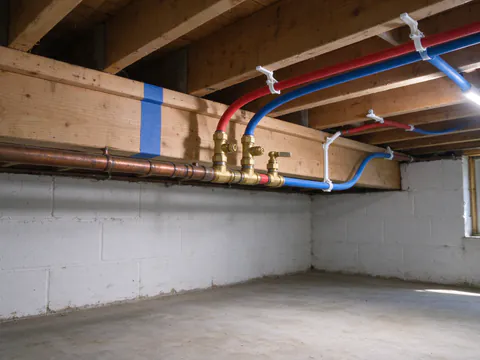
- Copper or steel to PEX uses a brass or listed adapter matched to the PEX fitting system.
- CPVC to PEX or copper uses a transition fitting made for that pair, not solvent cement on a threaded adapter that was never meant for it.
- Every fitting touching drinking water should be lead-free under NSF/ANSI 372.
A new transition is also where the electrical bond can break. In many older houses the metal water pipe is part of the grounding path, so cutting it and inserting a plastic section can interrupt that path. A bonding jumper across the repair keeps it continuous, and an electrician confirms it where the bond is in question.
When a repair is sensible and when it signals a repipe
A repair makes sense when the failure has a single cause and the pipe around it is sound. One freeze split in an otherwise healthy copper system, one weeping solder joint, one rotted heater nipple, or a PEX fitting set wrong are all repairs. So is an urgent repair in a house that will be repiped later, to buy time until the work can be planned.
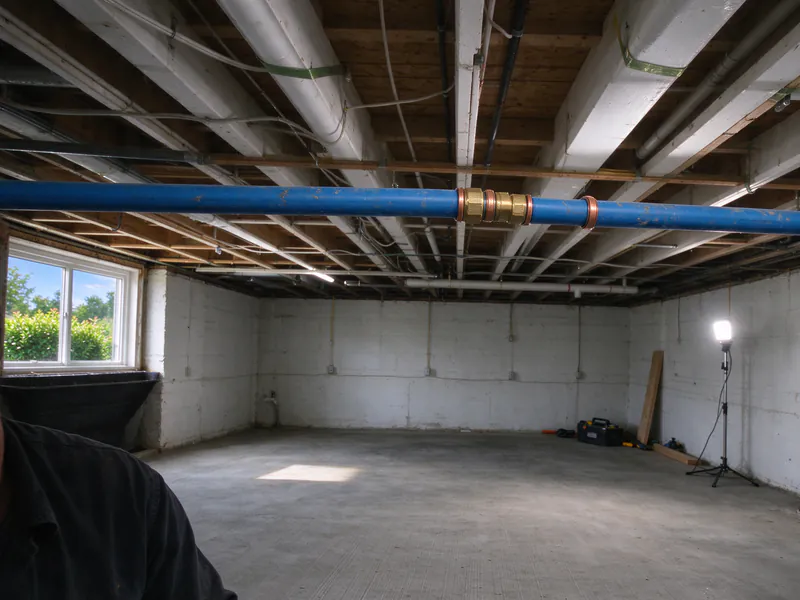
A repair is a poor bet when leaks keep coming from the same material in different places. A galvanized system that breaks somewhere new each time it is touched, copper with its third pinhole in a year, or a basement ceiling that has become a patchwork of copper, PEX and steel all say the pipe is failing as a system. Each patch is paid for separately, each opens another wall, and none improves the flow. The repipe vs repair guide works through the decision, and a partial repipe is the middle option when one branch or one bathroom group is clearly worse than the rest.
Low flow is the other sign. A repair can stop a leak, but it cannot clear scale from forty feet of galvanized branch. Where several fixtures are weak, galvanized pipe replacement is the scope that addresses it, and the low water pressure page explains how to check the service line and valves before blaming the pipe.
What moves the price of a repair
Repairs are priced on the job, not on a menu. The things that move the price are:
- Access. A leak in an open basement ceiling is a short job; one behind tile, plaster or a finished ceiling needs an opening and a patch.
- Material. Galvanized often needs a longer cut-out and a transition; PEX is quick to remake; copper near finishes may call for press fittings.
- How far back sound pipe is. The repair grows until it reaches pipe worth joining to.
- Valves. A seized main shutoff or fixture stop found during the repair may need replacing so the house can be isolated next time.
- Permit. Where the scope needs one, the City of Columbus or the suburb’s permit office sets the fee.
- Restoration. Who closes the opening, and with what, should be written down.
Testing before the wall closes
A repaired section is put back under pressure and watched before it is covered. New joints are checked for weeping, nearby old joints that were disturbed are checked too, and the main is opened slowly so trapped air and loosened scale do not hammer the line. Aerators downstream may need cleaning afterwards when the repair was on galvanized, since the cutover shakes rust loose. If you are unsure what your pipe is made of, the guide to identifying pipe material shows how to check with a magnet and a coin, and the repiping assessment helps judge whether the repair is likely to be the last one.