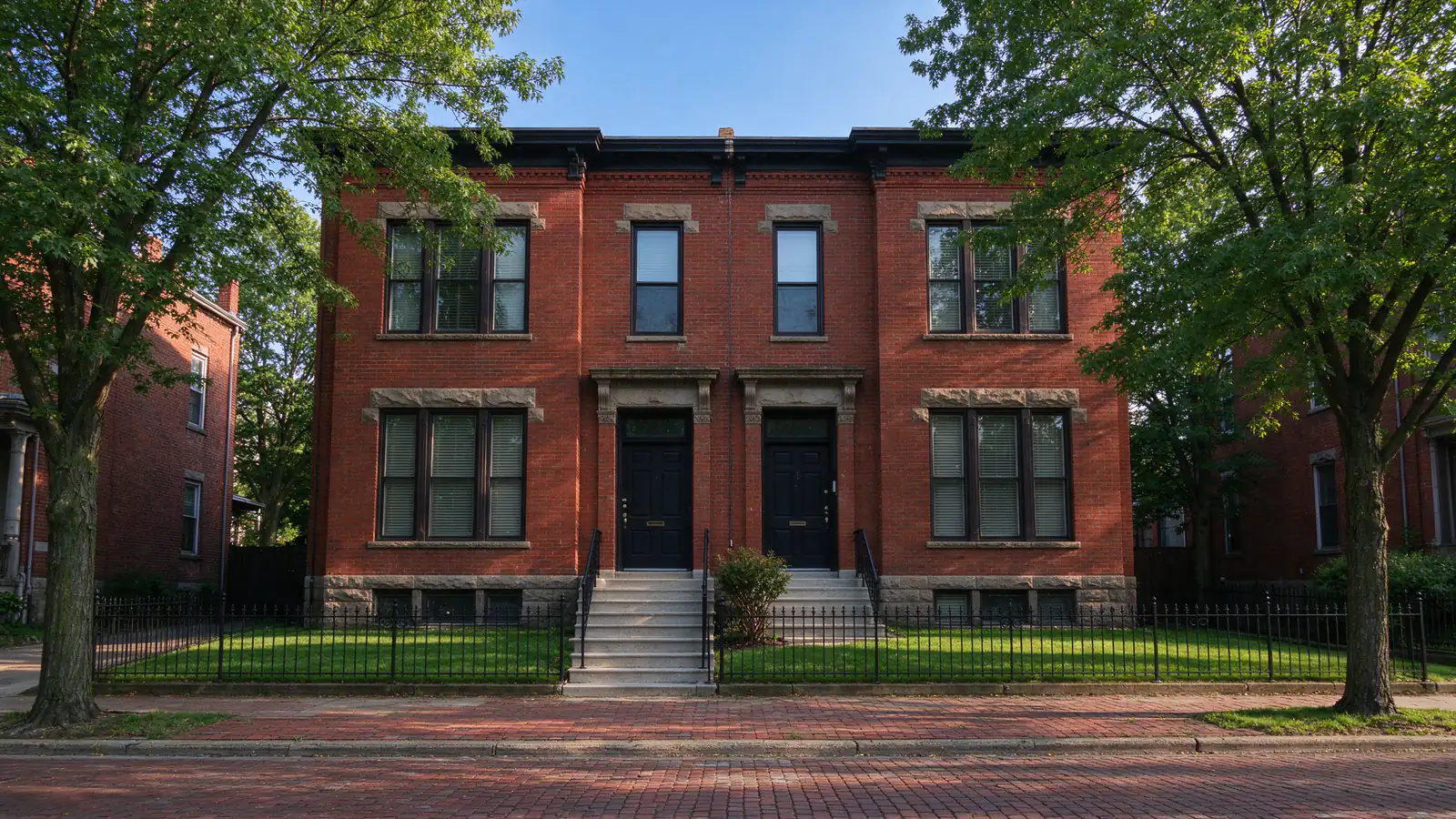
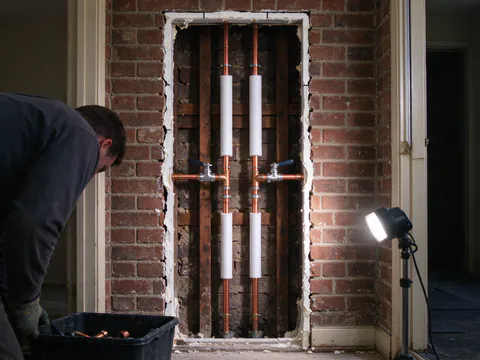
The brick streets south of downtown hold some of the oldest housing in Columbus, and much of its original plumbing. Slate Repiping Columbus replaces water supply piping in German Village, Merion Village, Schumacher Place and the Brewery District: whole-house and partial repipes in PEX or copper, galvanized replacement, and repipes in doubles and small buildings, carried out by licensed and insured plumbing contractors under a City of Columbus permit.
Age is the starting point here. In the 43206 ZIP that covers these neighborhoods, the Census Bureau counts 56.1% of homes as built before 1940, against 12.0% for Columbus as a whole. Nearly 70% are two stories or more on the County Auditor’s records, and about one in five homes sits in a building of two to four units. Those three facts shape most repipes in the area: old pipe, a climb between floors, and lines that may serve more than one household.
What the City’s service line records show about 43206
Columbus keeps a public inventory of every service line, the buried pipe from the water main to the house. Inside 43206, 21.4% of the lines are galvanized on the customer’s side and about a third are lead on the City’s side. The City stopped allowing new lead or galvanized service lines in December 1963, so a galvanized service line is a strong hint about the era of the plumbing it feeds.
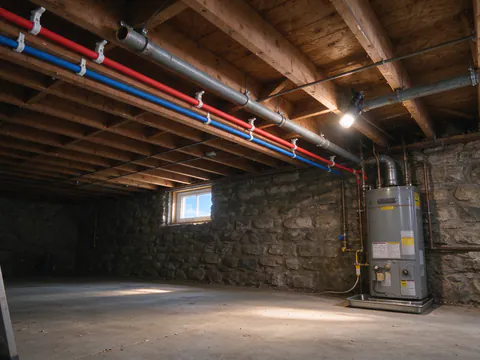
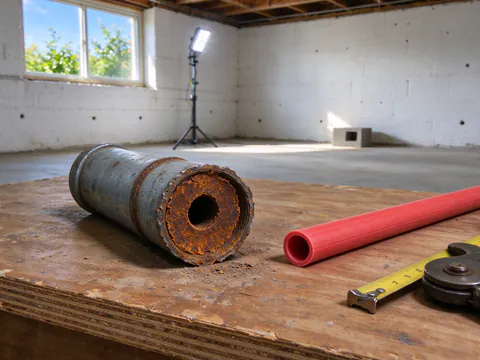
A service line is not house piping, and its material does not prove what is inside the walls. It is still the best public clue there is, and it lines up with what a basement in this area usually shows: threaded steel near the meter, copper where a past owner fixed a leak, and steel again further up. The guide to whether galvanized pipes are safe explains what that mix means for flow and water quality.
When the City’s line crews reach your street
The City’s lead service line program replaces lead and galvanized service lines on both the City side and the owner’s side, street by street, during a twelve-year project. Its map shows 1,072 signed work agreements in 43206, second only to the Hilltop. Owners in the area are therefore deciding about service lines now, and the interior pipe comes up in the same conversation.
The City’s work stops at the house. Its program notes that interior lead hazards are not replaced, so galvanized branches, lead-soldered copper joints and old brass valves stay as they were. Some owners use the replacement as the moment to plan an interior repipe, because the water is already being shut off and the basement is already being opened near the meter. The Columbus lead service line program guide covers how the two jobs can be sequenced without one undoing the other.
Planning around the City's line work?
A walk-through traces the inside pipe from the meter so the interior scope is ready when the street work is.
How a repipe usually runs in a German Village house
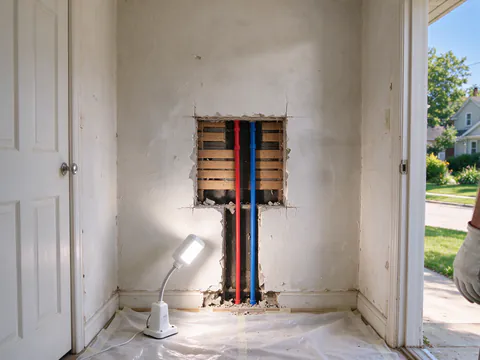
Most homes here have a full basement, 79% of the Columbus-city parcels in 43206 on the Auditor’s records. That is where the work starts: a new main from the shutoff along the joists, branches to the kitchen and laundry, and the water heater reconnected. The climb to an upstairs bath is the harder part in a brick house, because exterior walls are masonry and interior walls are often plaster on lath. The best routes are usually a closet stacked under the bath, a kitchen chase or the space beside an old soil stack.
In a double, the first job is to find out which half each line feeds. Some doubles have two meters and two mains; others share a main with branches that cross the party wall. A scope that covers only one side has to say where the boundary is and what old pipe stays connected, or the new side can still draw rusty water from the old one. The commercial and multi-unit repiping page covers buildings with more units and more households living in them during the work.
Cold is the other thing a route has to respect. Columbus averages about 103 nights a year at or below freezing at the airport station, by NOAA’s climate normals, and the City’s building code sets a frost depth of 32 inches. Old supply pipe in a brick house sometimes runs inside or against an exterior wall, where a hard January can freeze it. A repipe is the chance to move those lines to interior walls and heated chases, and to insulate any run that has to stay near the outside. New pipe does not remove freeze risk by itself; where it runs does.
German Village is a City historic district, and its architectural review applies to exterior changes. We found no rule that brings interior plumbing under that review, so a repipe goes through the regular City plumbing permit. Anything that changes the outside, such as a relocated hose bibb on a front wall, is worth checking with the City before it is drawn into the scope.
Permit, inspection and price
These neighborhoods are inside the City of Columbus, so Building and Zoning Services issues the plumbing permit and inspects the work. For a 1, 2 or 3 family home the permit is $275 with two inspections, and the City recorded 639 residential plumbing permits in 43206 from 2023 through 2025. A building of four or more units moves to the multi-family permit, which is $550 with one inspection or $700 with two.
Price follows the house more than the ZIP. Two stories, plaster, a double’s two sets of fixtures and the choice of copper all push toward the upper part of the typical Columbus-area range of $4,000 to $15,000 or more for a whole-house repipe. The Columbus repipe cost guide breaks down what sits inside that number, and the cost estimator gives a planning range without a phone call.
Nearby
Owners in German Village often compare notes with the Hilltop, where the City’s line program is busiest, with Bexley, which runs its own water system and inventory, and with Clintonville, where the houses are a generation younger. The service areas page covers Olde Towne East and the other near-east neighborhoods, which share much of this housing stock.