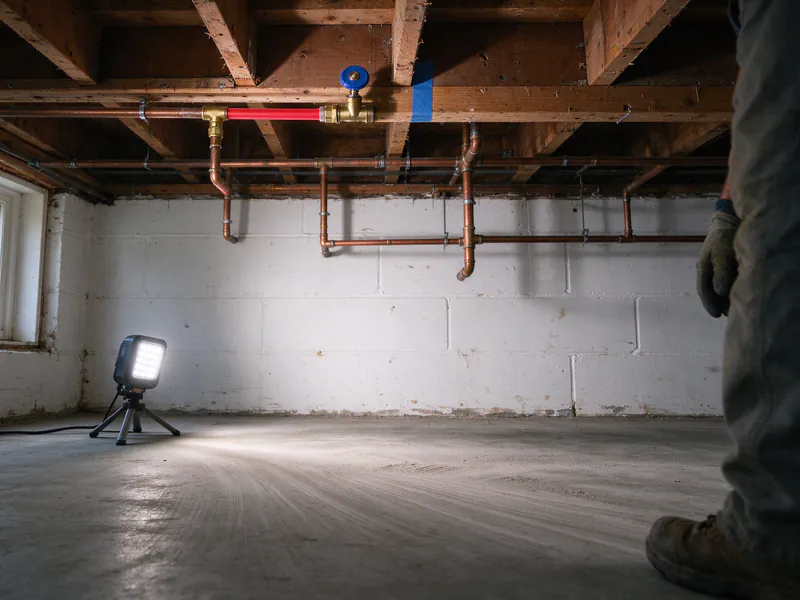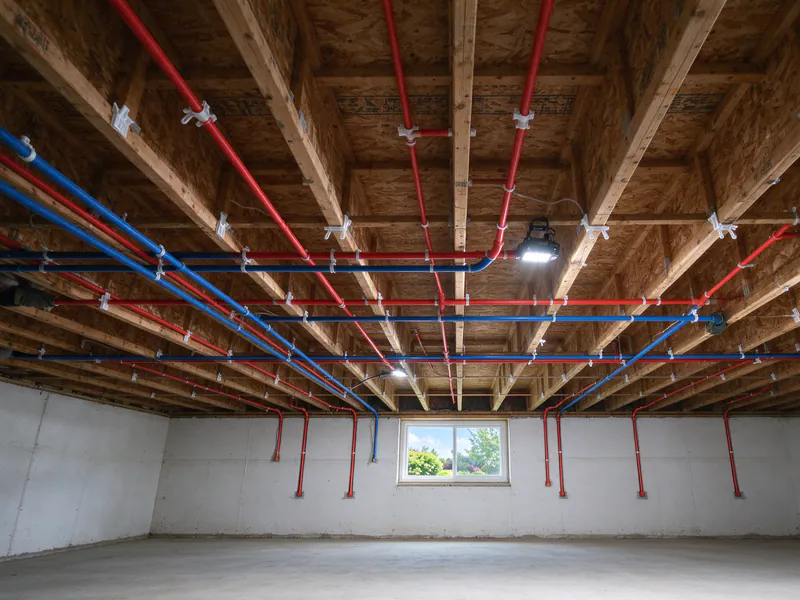
Not every house needs every pipe replaced at once. Slate Repiping Columbus offers partial repiping in Columbus and the nearby Franklin County suburbs, replacing a defined section of the water supply such as the hot side, a bathroom group or a floor. The work is carried out by licensed and insured plumbing contractors under the plumbing permit for the address.
A partial repipe is a real choice with its own risks. Old pipe stays in service beside new, and the boundary between them becomes the most important line in the scope. A partial repipe does not mean the house is repiped, and a scope that blurs that difference leaves an owner, a buyer or an inspector with the wrong idea. Where the problem is everywhere, a whole-house repipe is usually the better answer; where it is one leak, pipe repair may be enough. The repipe vs repair guide lays out where each fits.
What the first visit has to settle
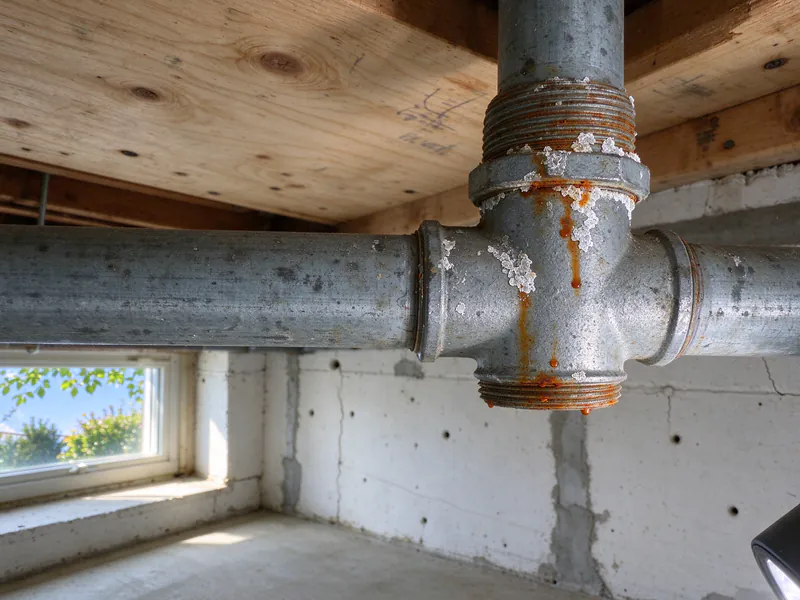
The first question is whether the problem is local. One pinhole in a copper line below a bathroom, a single corroded galvanized branch or a hot side that has failed while the cold side holds up can all justify a section. Leaks in several rooms on both hot and cold, rusty water at every tap or weak flow everywhere usually point at the whole system.
The walk-through traces each problem line back toward the main and records what it is made of along the way, using the same checks in the pipe material guide. It also measures static pressure and flow, because weak flow at one fixture can come from a clogged cartridge or a half-closed stop rather than the pipe. Where the section boundary would sit is marked on the spot, along with whether the old pipe at that point is sound enough to join.
Where the boundary goes
A boundary is drawn where old pipe is still in good condition, where a joint can be reached later and where a shutoff can be added. Drawing it a few feet further than the obvious point often costs little and avoids joining new pipe to the most corroded length of old.
Hot side only
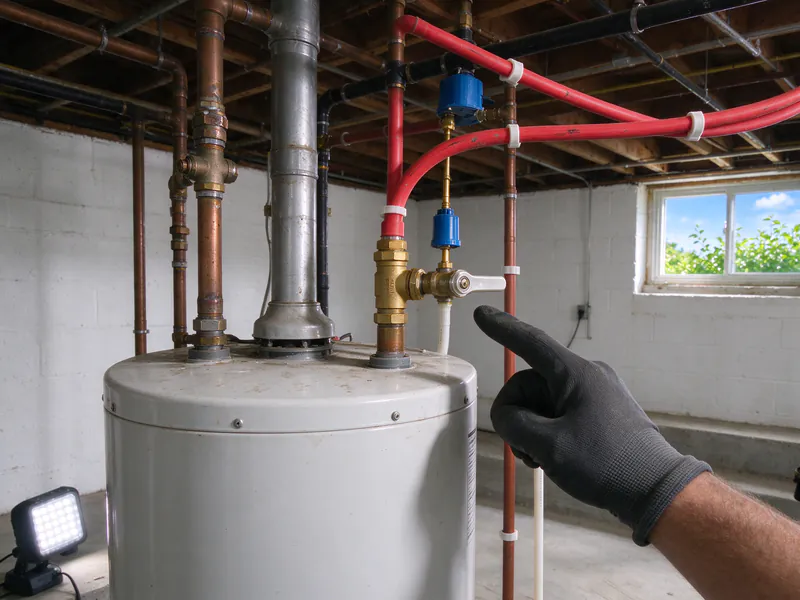
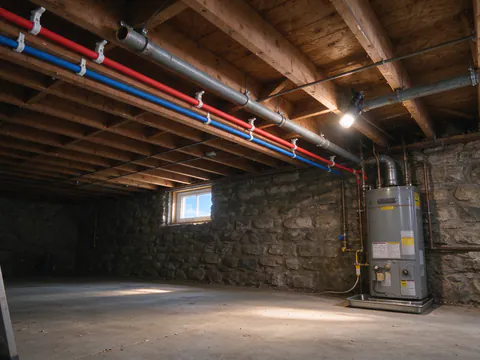
Replacing every hot line from the water heater to the fixtures is one of the most common partial scopes. Heat speeds up corrosion, so in a galvanized house the hot side often scales first, and in a copper house hot lines with fast-moving water can wear at elbows. A hot side repipe leaves the cold lines and the main in place, and the scope says so.
Cold side, the main or one bath group
Some houses need the reverse: the basement main and cold branches replaced because steel near the meter is restricting the whole house. Others need one bath group, from the point where its lines leave the main to the fixtures. In a two-story Columbus house, the riser to the upstairs bath is often the most restricted pipe in the building, because it is the longest vertical run.
One floor
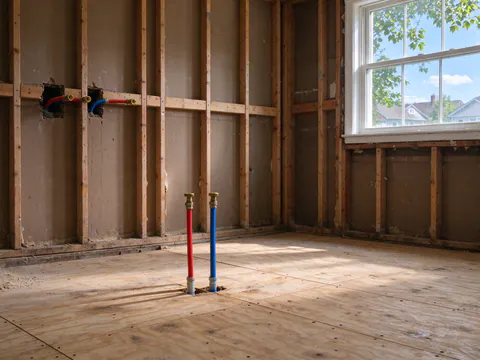
A floor-by-floor scope replaces every line on that level and the risers that feed it. It suits houses where one floor was already redone during a past remodel, or where an owner wants to replace the upstairs now and the basement later.
Joining new pipe to old
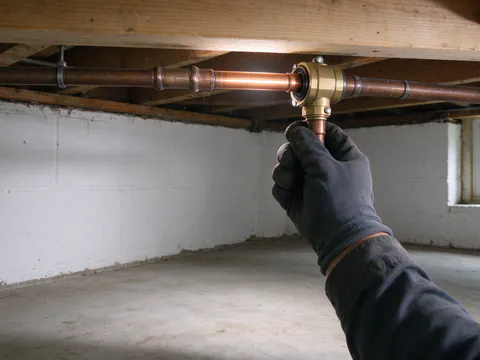
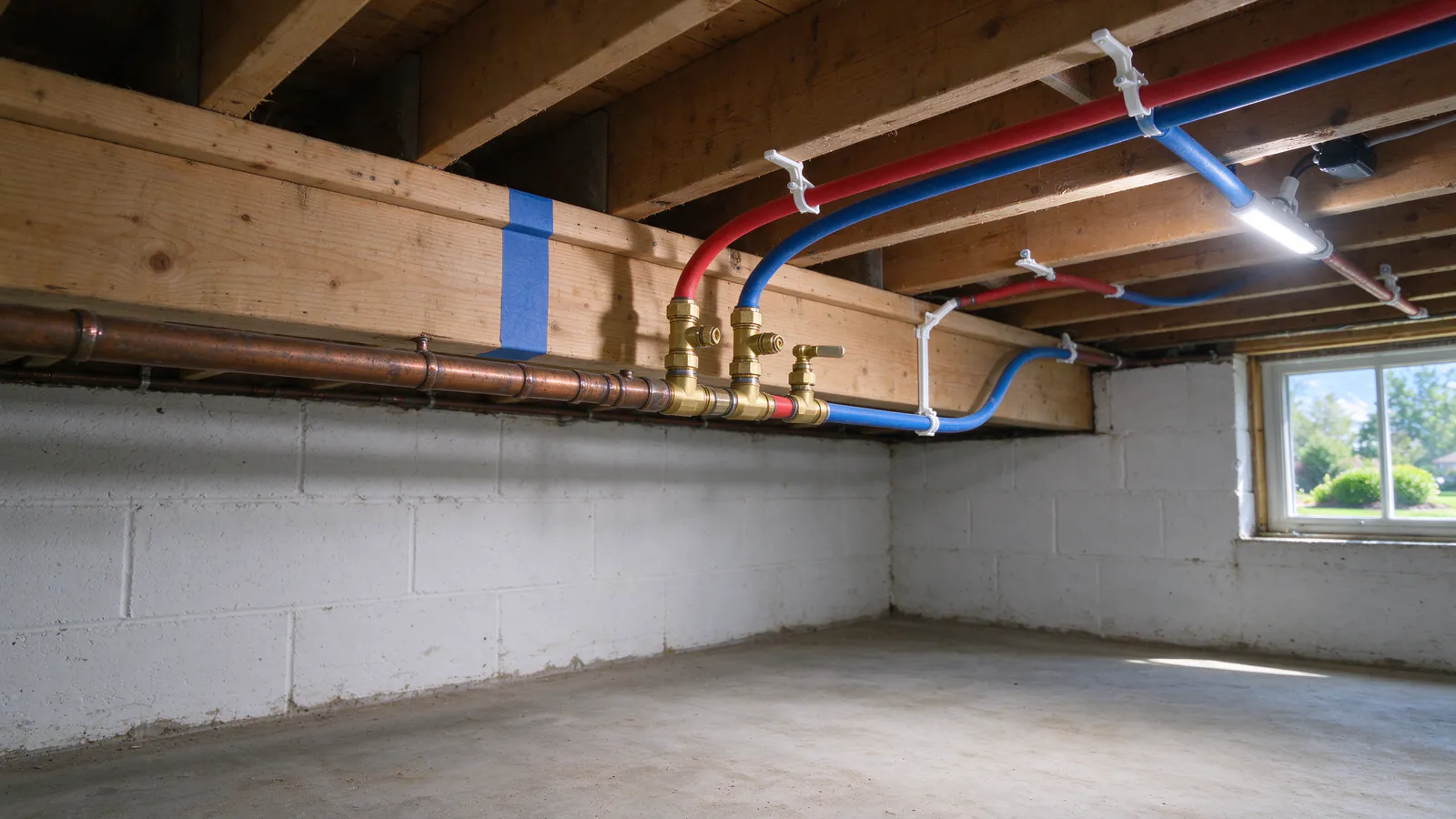
Every place where new pipe meets old needs a listed transition fitting. Where new copper meets retained galvanized steel, a dielectric fitting keeps the two metals apart. Where PEX meets old copper, a listed adapter is used rather than a push fitting buried in a wall. Each transition is put where it can be reached later, ideally next to a new shutoff, so the next stage can start there without opening the same wall twice.
The retained old pipe also needs a check. Cutting into a corroded steel line can loosen scale, and changing flow patterns can push it downstream. Aerators and cartridges on fixtures still fed through old pipe may need cleaning after cutover.
Only one part of the house acting up?
The walk-through traces the problem back toward the main and marks where a boundary would hold.
What stays old, in writing
The scope for a partial repipe lists the old pipe that stays in service, its material and roughly where it runs. That list matters later. A buyer’s inspector who sees new PEX in the basement may assume the house is repiped; the written scope shows what was done. If galvanized or polybutylene remains, the guide to buying a house with old pipes explains how that comes up in a sale.
The list also shows which fixtures are fully on new pipe. A sink fed by a new branch that still draws through an old steel main can keep showing rust or weak flow, and the owner should know that before the job, not after.
When a section costs more over time
A partial repipe costs less now and more in total if the rest of the system follows. Each stage needs its own permit, its own openings, its own patching and its own pressure test, and some walls may be opened twice. In Columbus, each extra inspection trip is $225 on top of the permit. Planning the whole system once, then building it in phases, reduces that waste: the trunk lines are sized for the full house, and each boundary is placed where the next phase will join. Doing a section while walls are already open for a remodel avoids much of it, as the repiping during renovation page explains. Lining old pipe is sometimes offered as an alternative to replacing a section, and the pipe lining vs repiping guide covers where that does and does not fit.
Price, permit and testing
There is no public price range for a partial repipe in Columbus, because sections vary too much. The length of pipe, the number of fixtures served, the openings, the material and the number of transitions set the price. The repipe cost guide explains each of those drivers.
A partial repipe still needs a plumbing permit. Inside the City of Columbus, Building and Zoning Services issues it at $275 for a 1, 2 or 3 family home with two inspections, and repiping is not on the City’s minor work list. Suburban permits run through the city and Franklin County Public Health, as the Columbus repiping permit guide explains. The new section is pressure tested before walls close, with the boundary joints watched closely, then flushed.