Slate Repiping Columbus repairs and reroutes supply leaks under concrete floors for houses and small buildings in Columbus and nearby Franklin County communities. A slab leak is a leak in a water line buried in or under a concrete floor, so it cannot be seen and cannot be reached without either breaking the floor or going around it. The decision this page helps with is which of those to do. The work is carried out by licensed and insured plumbing contractors.
If you only suspect a leak and do not know where it is, water leak detection is the first step. If water is coming up through the floor and will not stop, shut the main and treat it as an emergency pipe repair; emergency calls are answered around the clock.
Slab homes are the exception here
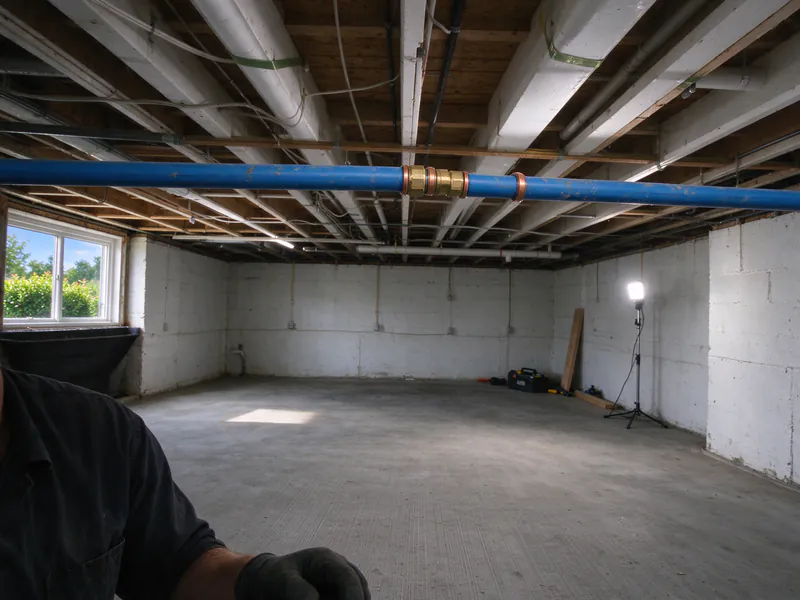
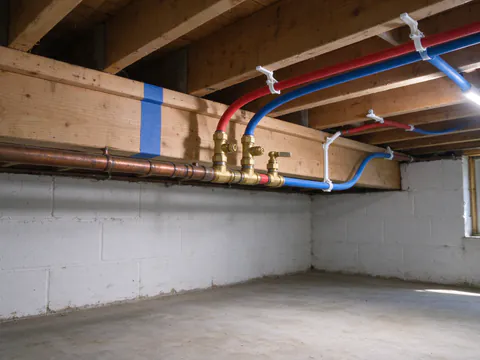
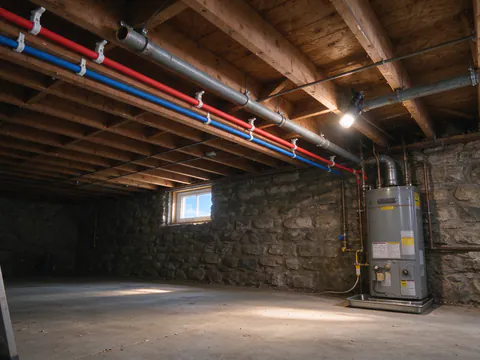
Most Columbus houses do not have their water lines under concrete. The County Auditor’s records show 51.4% of Columbus dwelling cards with a full basement and another 16.4% with a crawlspace or part-crawl, and in those houses the supply mains run along exposed basement joists or through the crawl. A leak there shows up overhead and is usually a straightforward pipe repair.
The rest is a different picture. On the same records, 31.5% of Columbus dwelling cards list no basement. That figure includes condominium units, which make up a large share of it, so not every one of those homes is a slab house with pipe in the floor. Some suburbs have more single-family slab and no-basement houses: Whitehall records 37.2% of its dwelling cards with no basement and Reynoldsburg 36.2%. Ranch houses, newer subdivisions and condominium buildings are where slab-on-grade plumbing is most likely.
Slab-on-grade additions on basement houses
The most common slab leak in a basement city is in the part of the house that was added later. Many older Columbus houses have a family room, a kitchen expansion, a sunroom or a converted garage built on a slab beside the original basement. Where a bathroom, wet bar or kitchen sink went into that addition, its supply lines may run under the new concrete. A leak there behaves exactly like a slab leak, even though the rest of the house is plumbed overhead.
Signs of a supply leak under a slab
Supply lines are under pressure, so a slab leak runs constantly. The usual signs are:
- A warm spot on the floor, often from a leaking hot-water line.
- Running water heard under the floor with everything off.
- A water meter that keeps moving with every fixture closed.
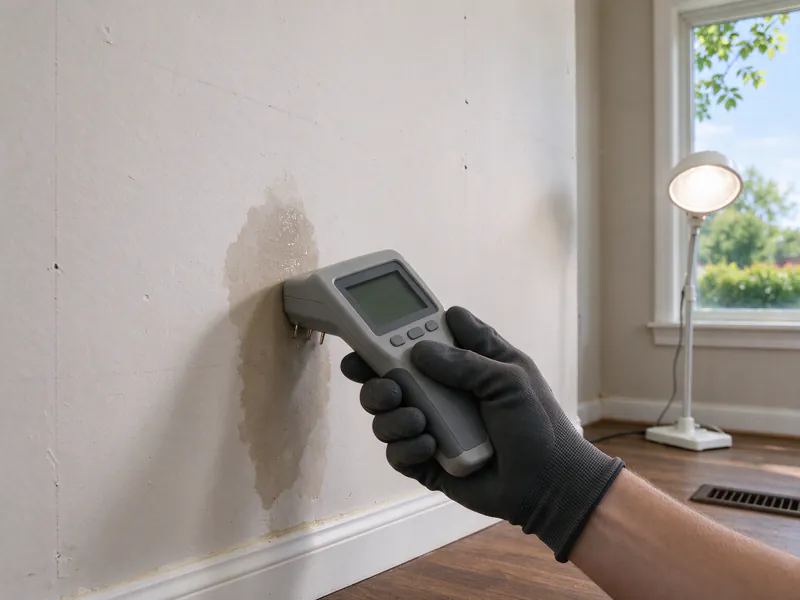
- Damp carpet, cupping wood or lifting tile with no plumbing fixture above it.
- A water heater that runs more often than it used to.
- A water bill that rose without a change in use.
Drains also run under slabs, and a drain leak only leaks when something drains. Testing sorts supply from drain, and hot from cold, before any decision is made.
How a slab leak is located
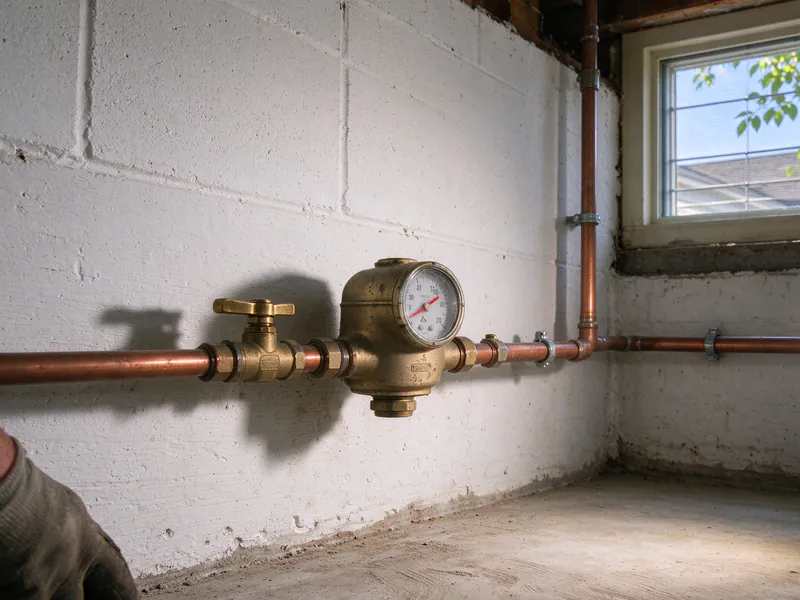
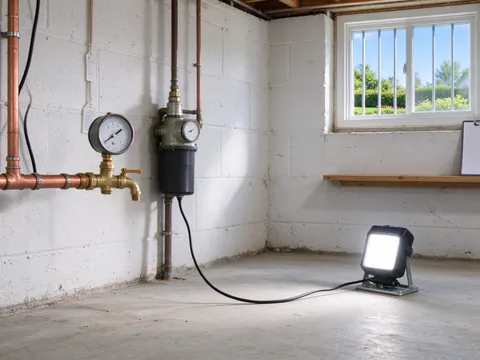
The meter test shows whether water is leaving the system. Closing the cold supply into the water heater separates the hot side from the cold, which tells you which line is leaking and often explains a warm floor. A pressure gauge on each side confirms it. From there, listening for the leak through the floor and reading surface temperature can narrow it down, especially on hot lines. These methods are described in general terms on the leak detection page. The location they give has a margin, and under concrete that margin matters, because every foot of uncertainty is more floor to break.
Warm floor or a meter that won't stop?
Note which room, and whether the house or only an addition is on a slab. The options come in writing before any concrete is cut.
Direct repair, reroute or repipe
Direct repair through the slab
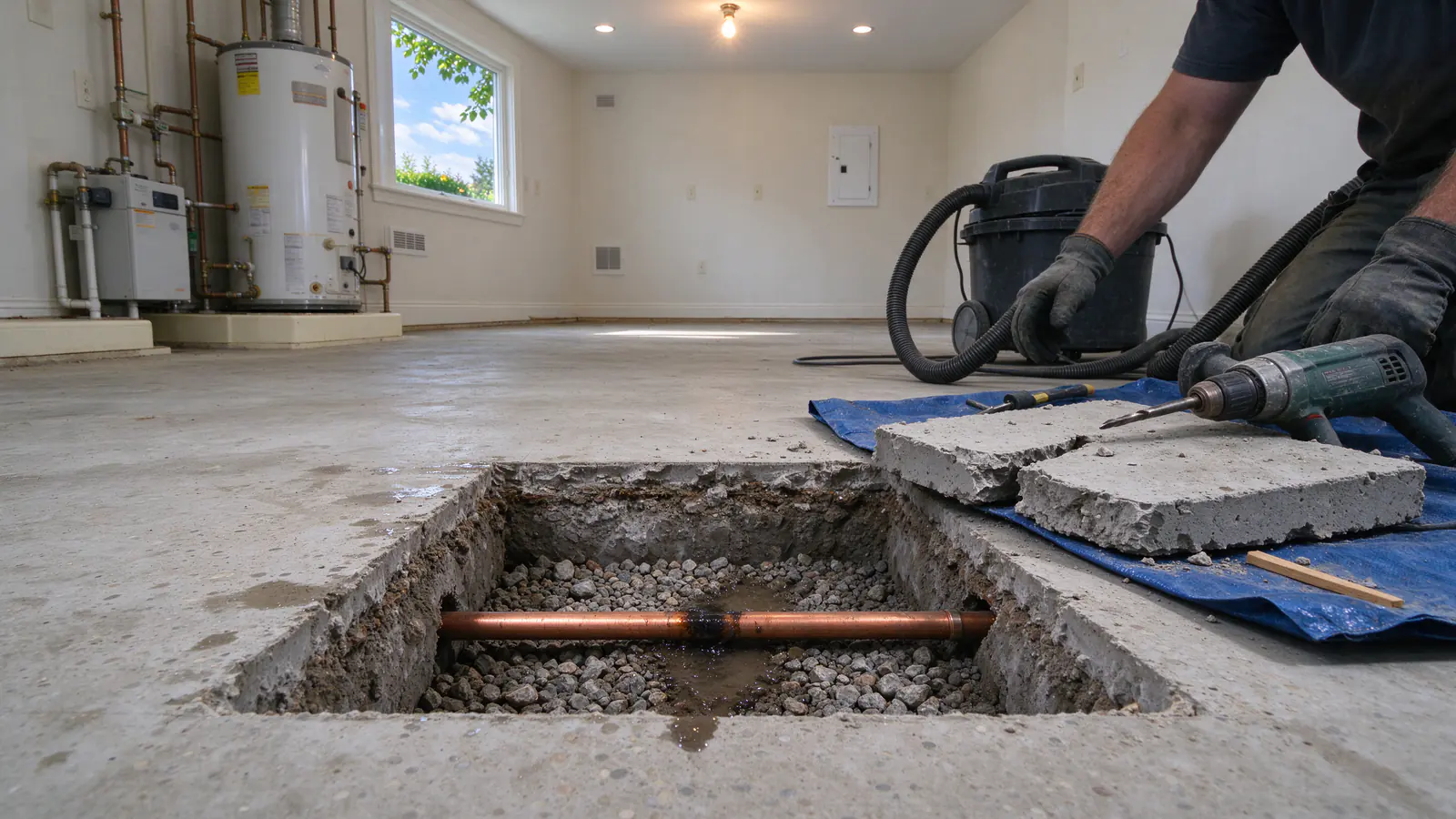
The floor finish is lifted, the concrete is cut and broken out over the leak, the pipe is exposed and repaired, and the floor is patched. This keeps the original layout and is the smallest plumbing job when the leak is precisely located and the pipe around it is sound. It is a poor fit when the location is uncertain, when the floor is finished in tile or wood that is hard to match, or when the pipe is old enough that the next leak is likely to be a few feet away.
Reroute above the slab
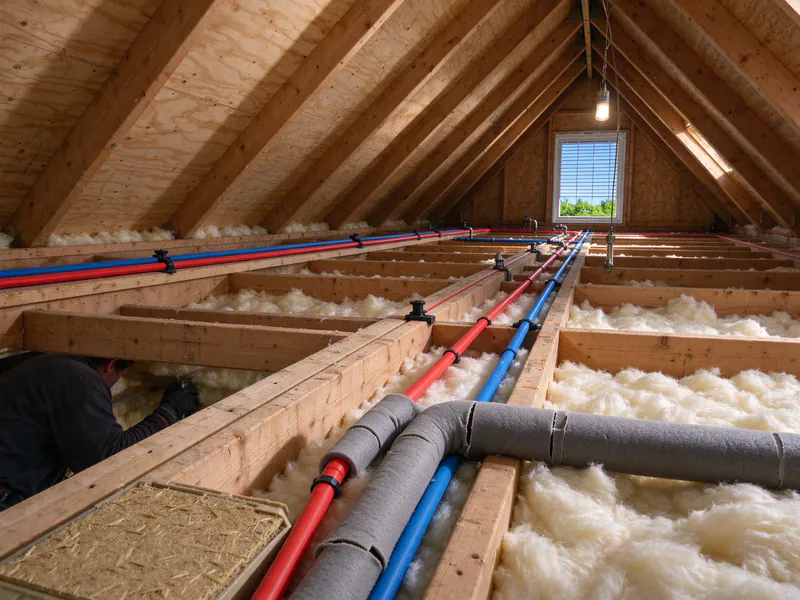
Rerouting abandons the leaking line under the slab and runs a new one along a different path: up through a wall, across a ceiling or attic, and down to the fixture. The old line is cut and capped where it leaves the slab. No concrete is broken, and the new line is reachable later. The work moves to walls and ceilings instead, so the openings are listed in the scope. PEX is often used for reroutes because it bends through framing with fewer fittings, though copper is also allowed, and the PEX vs copper guide covers the choice.
In an attic, a rerouted line needs to stay inside the insulation on the heated side. Columbus averages more than a hundred nights a year at or below freezing by NOAA’s normals, so a line laid on top of attic insulation trades a slab leak for a frozen pipe.
Repipe overhead
Where the under-slab pipe has leaked more than once, or is the same age and material throughout, moving all of the supply piping out of the slab is the longer-term answer. A repipe runs new mains and branches through ceilings, walls and attic space and abandons the whole under-slab system. In a slab addition on a basement house, that may only mean rerouting the addition’s few lines back to the basement, which is a partial repipe. In a full slab house, it is a whole-house repipe, and the guide to how invasive repiping is describes what to expect.
Permit and testing
Rerouting and repiping put new piping in the house, so they need a plumbing permit: Building and Zoning Services inside the City of Columbus, or the suburb’s permit office with Franklin County Public Health review in places such as Whitehall and Reynoldsburg. Whether a direct repair needs one depends on its scope. Either way, the repaired or new piping is pressure tested before the floor or the walls are closed.
What a slab leak repair depends on
There is no flat price for slab leak work. The main drivers are how precisely the leak can be located, the floor finish over it, the length and difficulty of a reroute path, how much wall and ceiling has to open, the pipe material, and whether one line or the whole under-slab system is being replaced. Water damage to flooring and the structure is a separate matter for restoration and, often, insurance; the homeowners insurance guide explains how sudden leaks and wear are usually treated, and the repipe vs repair guide helps decide whether one repair is the end of it.