Slate Repiping Columbus diagnoses and fixes low water pressure in houses and small buildings in Columbus and nearby Franklin County communities. Weak flow has several possible causes, from a clogged aerator to a scaled galvanized branch to the service line from the street, and each has a different fix at a very different scale. This page walks from the meter to the tap the way a diagnosis should, so the fix matches the cause. Repiping is one possible answer and is never promised as the answer before the cause is known. The work is carried out by licensed and insured plumbing contractors.
One fixture or all of them
The first and most useful question is how widespread the problem is.
- One fixture is weak and the rest are fine. The cause is almost always at that fixture: a clogged aerator or showerhead, a worn cartridge, a fixture stop that is partly closed, or the short branch feeding it.
- One floor or one side of the house is weak. A branch is restricted, often a scaled galvanized line feeding the upstairs bath or the far end of the house.
- Only hot is weak. The cause is at the water heater or on the hot side.
- Everything is weak, including the laundry tub next to the meter. The cause is upstream of the house piping: the service line, the meter-side valve, the main shutoff or a pressure-reducing valve.
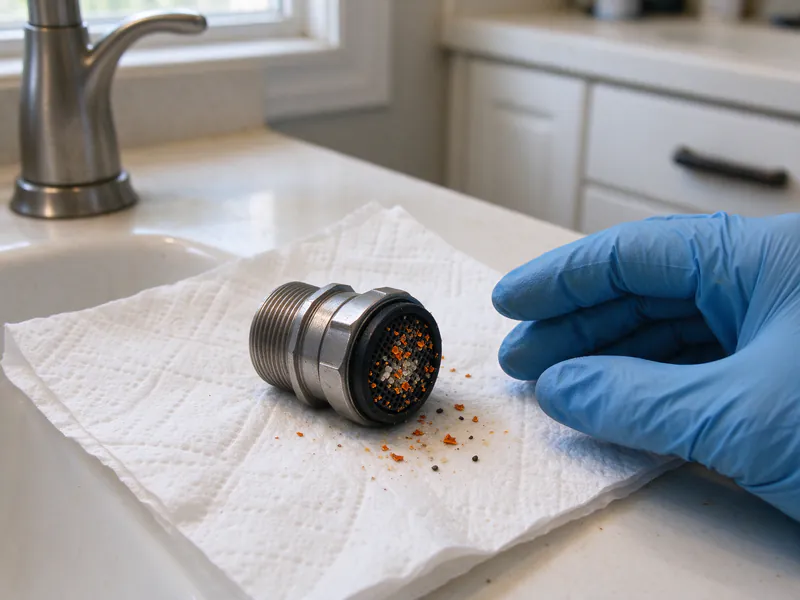
Columbus water is lime-softened to about 5.7 to 7.3 grains per gallon, by the City’s water quality report, so heavy lime scale is not usually the culprit. Aerators and showerheads still catch debris, particularly rust loosened from galvanized pipe or sediment after street work, and they are the first thing to check at a single weak fixture. Rust that comes out with the debris points back to the pipe, and the rusty water guide explains how to tell where it starts.
How it is tested
Low pressure is diagnosed with measurements, not impressions. The tests are simple:
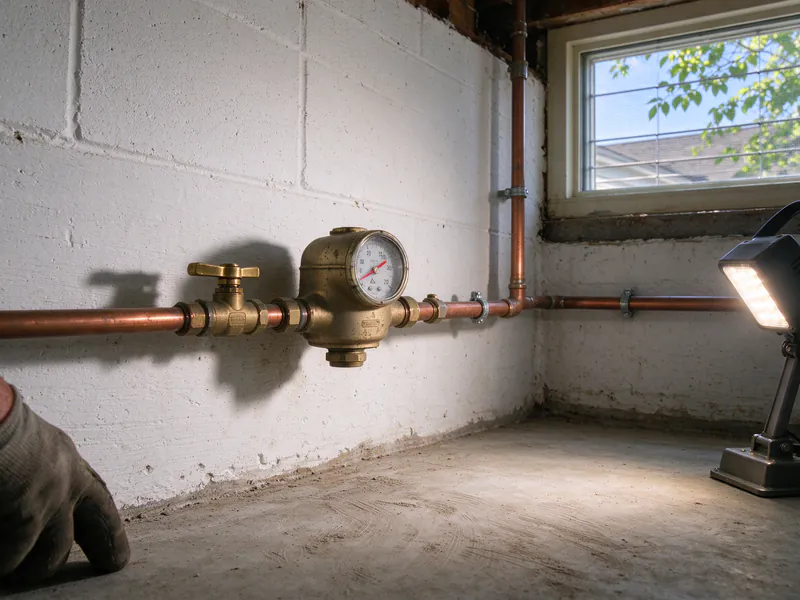
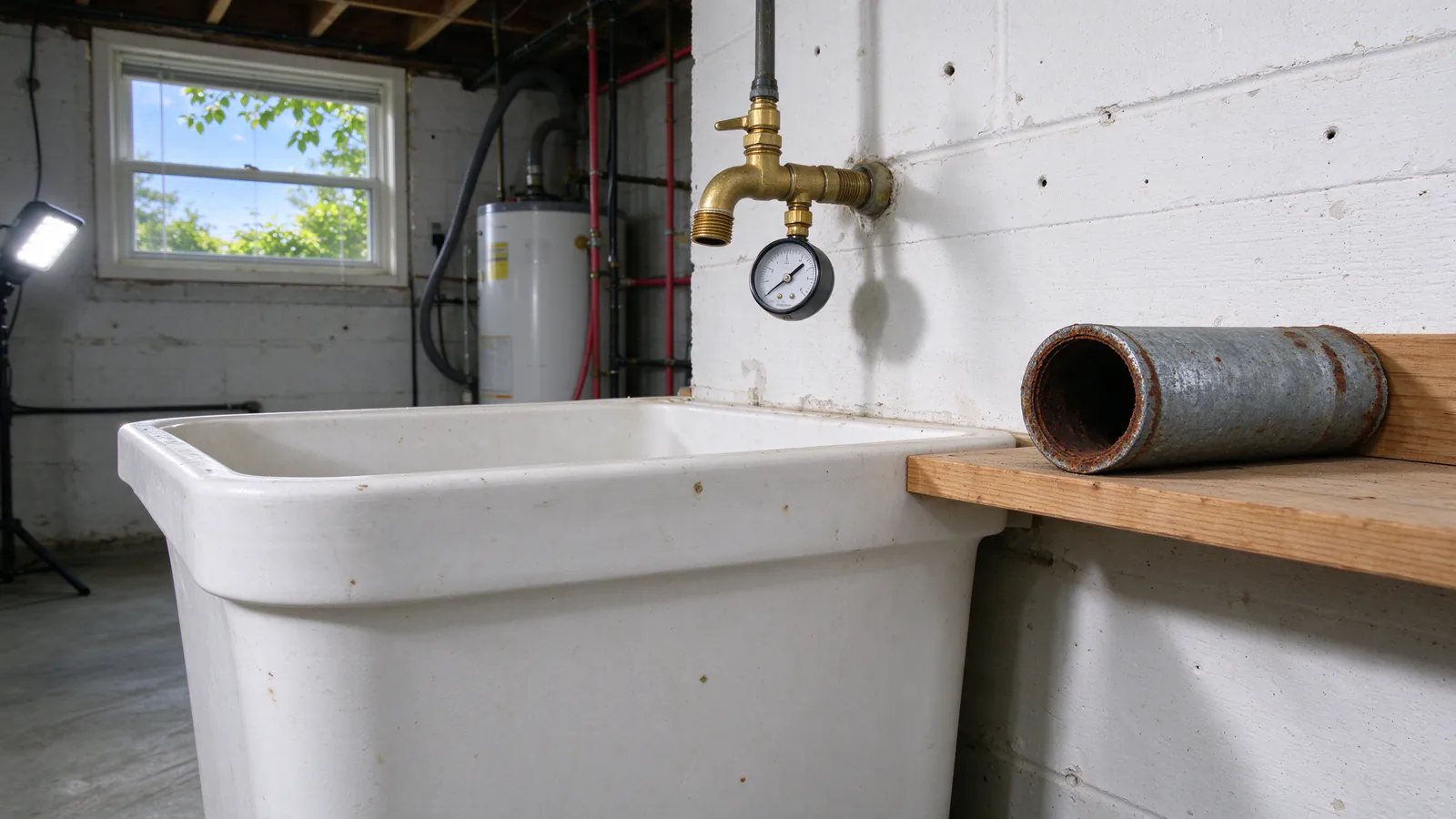
- Static pressure is read with a gauge on a hose bibb or test point near the meter, with no water running. This shows the force available to the house.
- Flow is measured at the main and at the weakest fixtures, by timing how long it takes to fill a container. Flow is what you feel in the shower.
- Simultaneous use checks flow at an upstairs fixture while a second tap runs. Scaled pipe shows its weakness here, when two fixtures compete for a narrow bore.
- Hot versus cold at the same fixture separates the water heater and hot side from everything else.
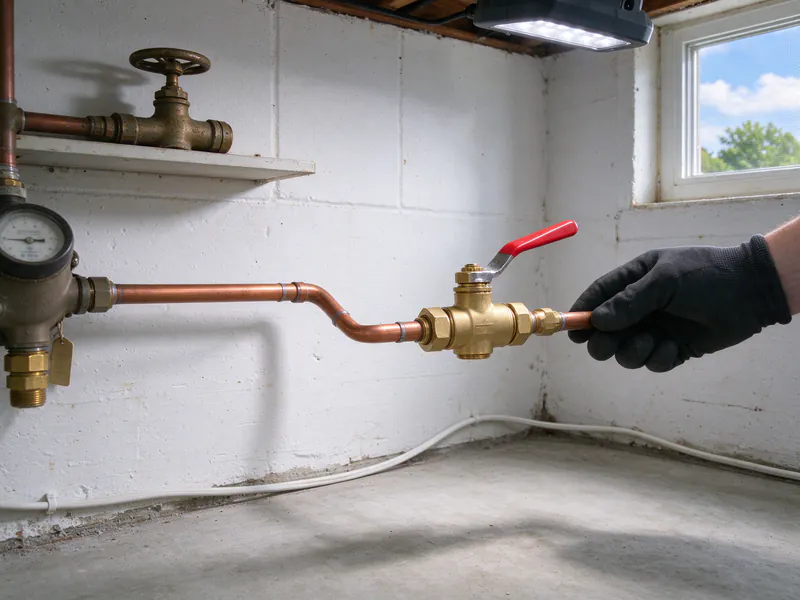
- Valves are checked to make sure the main shutoff, meter-side valve and branch valves are fully open and working.
The City of Columbus does not publish a standard static pressure for homes, and it varies by location, elevation and time of day, so there is no city figure to compare a reading with. The reading at your meter is the number that matters. The model code that the Ohio Plumbing Code is built on calls for a pressure-reducing valve where static pressure in a building exceeds 80 psi; where a house has one, it is tested as part of the diagnosis.
Shower fades when a toilet refills?
Note which fixtures are weak and whether it is hot, cold or both. That pattern points to the cause before any pipe is touched.
What fixes each cause
Aerators, cartridges and fixture stops
A weak single fixture is usually fixed at the fixture. Aerators and showerheads are cleaned or replaced, worn cartridges are replaced, and fixture stops that have been partly closed or have scaled shut are replaced. This is the smallest fix and the first to rule out.
Valves and the pressure-reducing valve
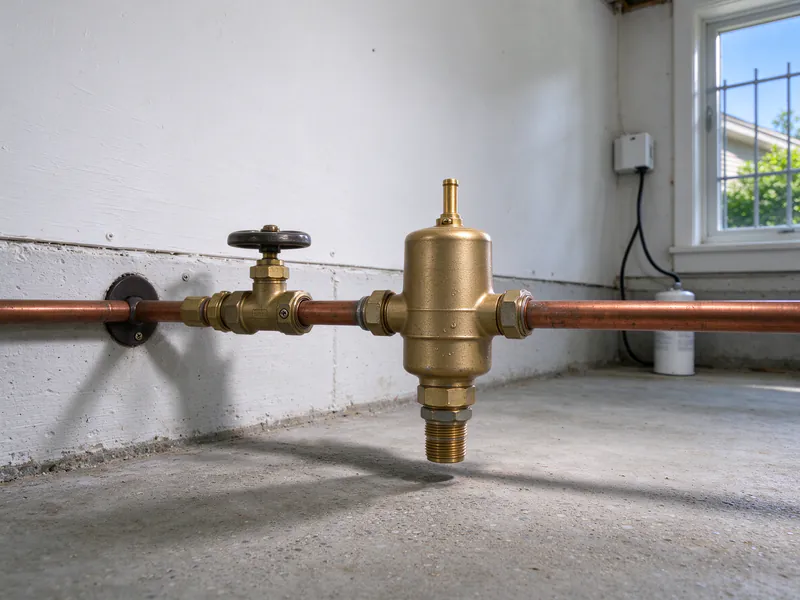
A main shutoff that was never opened fully after work, or an old gate valve whose gate has partly dropped, can choke the whole house. So can a valve at the meter setting left partly closed. A pressure-reducing valve, where a house has one, can fail with pressure drifting low or high. Replacing or adjusting these is a contained repair, and it is one reason the main shutoff is checked before any larger scope is proposed.
The water heater
Galvanized nipples on the hot and cold connections of a water heater rust and scale faster than the rest of the house. A weak hot side with a strong cold side often comes down to those few inches of pipe, a partly closed heater valve, or a heat trap or dip tube problem. Replacing the connections is a small job with a big effect.
Scale in galvanized
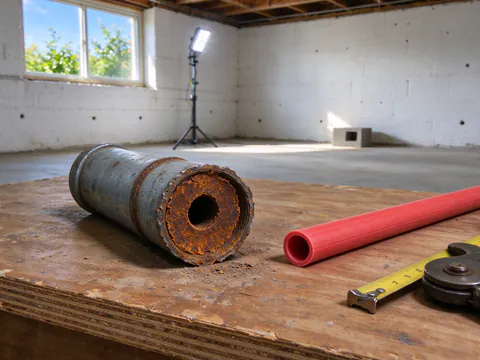
Galvanized steel corrodes from the inside. The zinc wears through, the steel rusts, and rust and scale build on the wall until the bore is a fraction of its original size. The outside can look fine. Flow drops gradually, upstairs and far fixtures suffer first, and the problem shows most when two fixtures run at once. Cleaning the pipe does not work; the scaled section has to be replaced. Where one branch is the problem, a partial repipe replaces it. Where the whole system is galvanized, galvanized pipe replacement is the scope, and the guide to whether galvanized pipes are safe covers the water quality side.
The service line
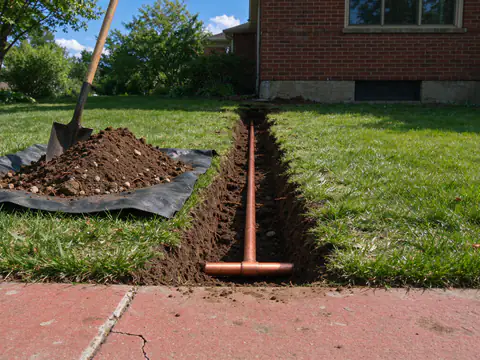
If flow is weak at the first fixture inside the house, the restriction is likely before the house piping, in the buried service line. Columbus stopped allowing new lead or galvanized service lines in December 1963, and the City’s public inventory still records 20,458 customer-side service lines as galvanized. A scaled galvanized service line limits flow to the whole house no matter what is done inside. Replacing it is water line replacement, and in Columbus the City’s lead and galvanized line program replaces them street by street, as the Columbus lead service line program guide explains, with lead service line replacement covering work outside that schedule. Work on the City’s service pipe requires a City of Columbus water contractor license.
Why a repipe is not a guaranteed fix
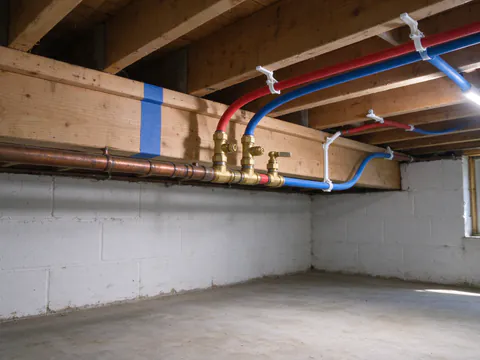
A repipe replaces the house’s supply piping. It fixes low flow caused by scaled or undersized pipe in the house. It does nothing for a restricted service line, a failing pressure-reducing valve or low supply pressure on the street, and new pipe connected to an old galvanized service line can still deliver weak flow. That is why the diagnosis runs from the meter in, and why a repipe scope should state what it can and cannot change about pressure. If you are not sure what your pipe is made of, the guide to identifying pipe material shows how to check with a magnet and a coin.
What it depends on
There is no flat price for fixing low pressure, because the cause decides the scope. An aerator or cartridge is minor. A valve or water heater connections are a contained repair. A scaled branch or a whole galvanized system is a repipe, and the repiping cost guide covers typical Columbus-area ranges for that. A service line is a separate job with its own City programs. The Columbus water pressure and hard water guide explains more about the water itself.