Slate Repiping Columbus offers and manages water line replacement for houses across Columbus and nearby Franklin County communities. This page is about the buried service line: the pipe that runs underground from the curb stop near the street, through the foundation, to the water meter in the basement. It is a different job from replacing the pipe inside the house, which is what a whole-house repipe does. The work is carried out by licensed and insured plumbing contractors, and work on the City service pipe is done by contractors holding the City of Columbus water contractor license.
A service line usually gets attention for one of three reasons. Water is coming up in the yard or through the basement wall. Flow at every fixture is poor even though the inside pipe has been checked. Or a notice from the water utility says the line is lead or galvanized. Each of those starts in a different place, and the first job is working out which one applies.
What the service line is, and who owns which part
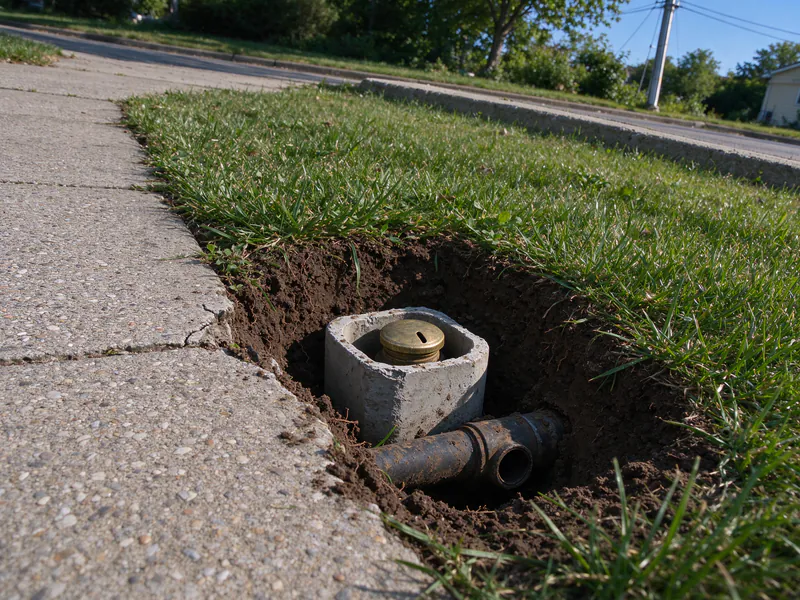
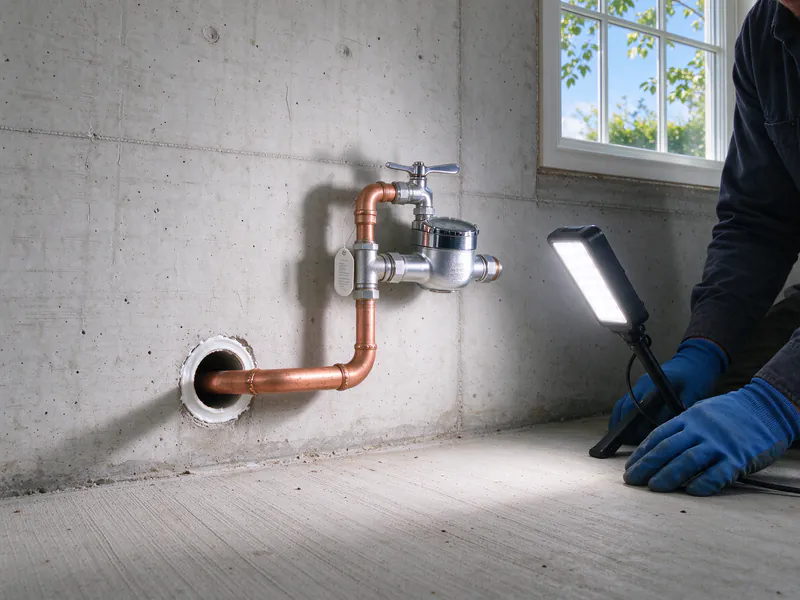
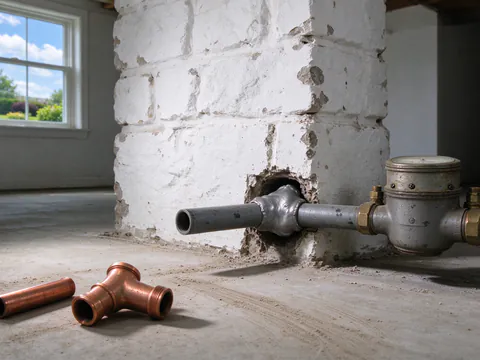
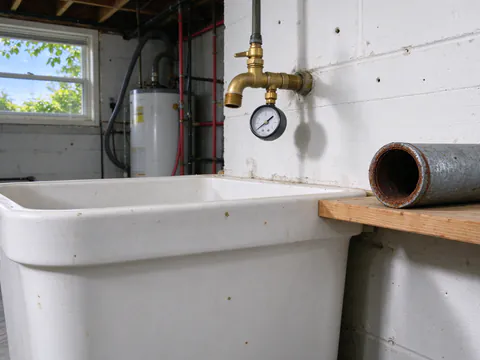
The City’s service line inventory splits every line into a utility side and a customer side, and the City’s loan paperwork describes the private side as running from the curb stop to the meter. The curb stop is the buried valve near the property line; the meter, in most Columbus houses, sits inside the basement near the point where the line comes through the wall. The City’s customer notices say the owner’s service line is usually found there, next to the inside meter.
That split decides who pays for what. Under the City’s lead service line program, a leak on the private side before scheduled construction reaches the street is the owner’s responsibility. Some Columbus owners have reported being told a leak near the main connection was theirs to fix, so the location of a leak matters before anyone starts digging.
Outside the city the arrangement changes. Bexley buys water from Columbus through master meters, and Columbus does not bill or maintain Bexley’s lines. Gahanna, Reynoldsburg and Obetz are also master-meter communities, and Westerville runs its own water plant and system. In those places the division between the city’s part and the owner’s part, and the rules for the new pipe, are confirmed per address with the city that supplies the water.
Signs a service line needs replacing
None of these proves the service line is the cause on its own, so each one gets checked against the rest of the system.
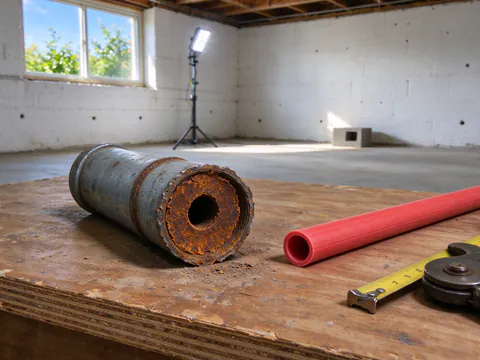
- Low flow everywhere. If every faucet is weak, including the one nearest the meter, the restriction may be upstream of the house piping. A galvanized service line closes up from the inside the same way galvanized house pipe does. The low water pressure page covers the other causes: a half-closed valve, a failing pressure-reducing valve, clogged aerators.
- Wet ground or a damp foundation wall. A soft patch of lawn along the line or a wet spot where the pipe comes through the wall can point to a leak in the buried run. A leak inside the house can look similar, which is why a plumber for water leaks or water leak detection sometimes comes first.
- A material notice. The City sends annual notices to owners whose line is listed as lead or galvanized. The notice is about the pipe material, not a test result for that house.
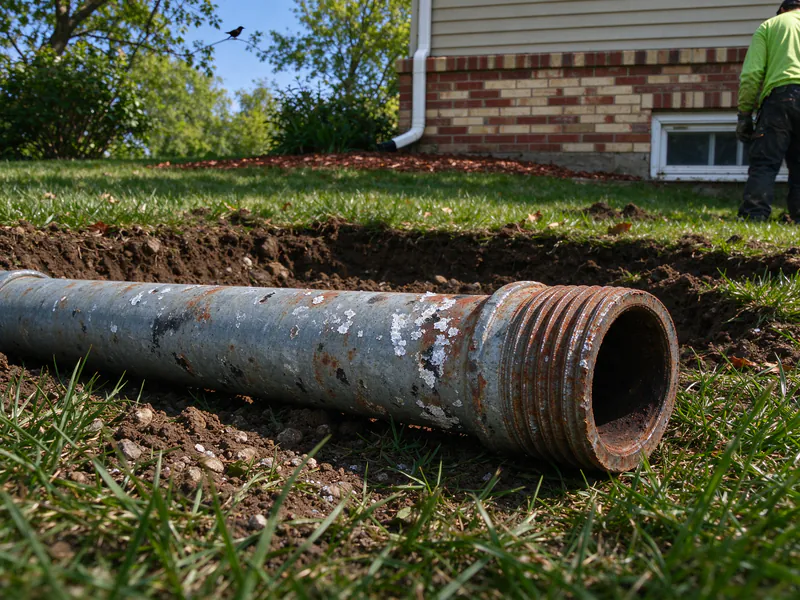
- Galvanized at the meter. Gray threaded pipe coming through the wall before the meter usually means the service line is galvanized too. The guide to identifying pipe material shows the magnet and scratch checks.
Columbus has not allowed new lead or galvanized service lines since December 1963, so a house built later is unlikely to have one unless records say otherwise. Houses built before then often do. The City’s inventory shows 31.0% of Grandview Heights service lines with galvanized pipe on the customer side, and more than 20% across the 43204, 43205 and 43206 ZIP areas.
If the line breaks
A service line that breaks can flood a basement or a yard in a short time. Close the main shutoff inside the house, usually next to the meter where the line comes through the wall. If that valve will not close, or the leak is between the curb stop and the shutoff, the water utility can close the curb stop. Turn off power or gas to the water heater if the house has lost water. Emergency calls for a water line break are answered 24 hours a day, seven days a week, and the emergency pipe repair page covers what happens next.
Repair or replace
A single leak on a copper or plastic line in sound condition can sometimes be repaired at one point. A lead line is different: City code declares lead and galvanized-requiring-replacement service lines a public nuisance and prohibits repairing a lead service line, so a leak on one means replacement or joining the City’s program. A galvanized line that is leaking is usually corroded along its length, and a patch at one joint tends to move the next leak a few feet down the pipe.
If the line is lead or galvanized, check the City’s program before hiring anyone. The Columbus lead service line program guide explains when the City replaces lines at no direct cost to the owner, and the lead service line replacement page covers when owners hire their own contractor instead.
How a service line is replaced
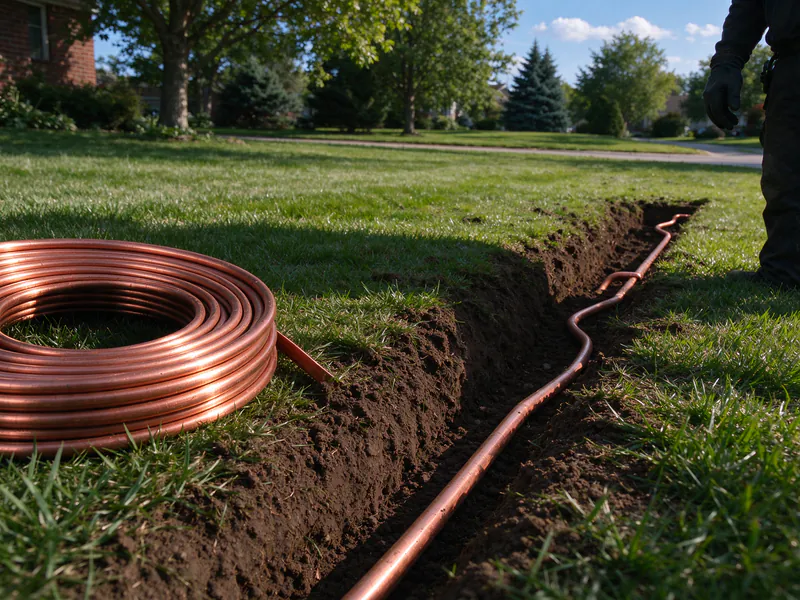
The new line in Columbus follows the City’s material rules: 2-inch and smaller service pipe is Type K soft copper from the main through the curb stop, and Type K copper or approved poly tubing from the curb stop through the meter setting. If an old tap at the main turns out to be lead or galvanized, the City’s rules say it is abandoned at the main rather than reused.
There are two general ways to get the new pipe from the curb to the house.
Open trench
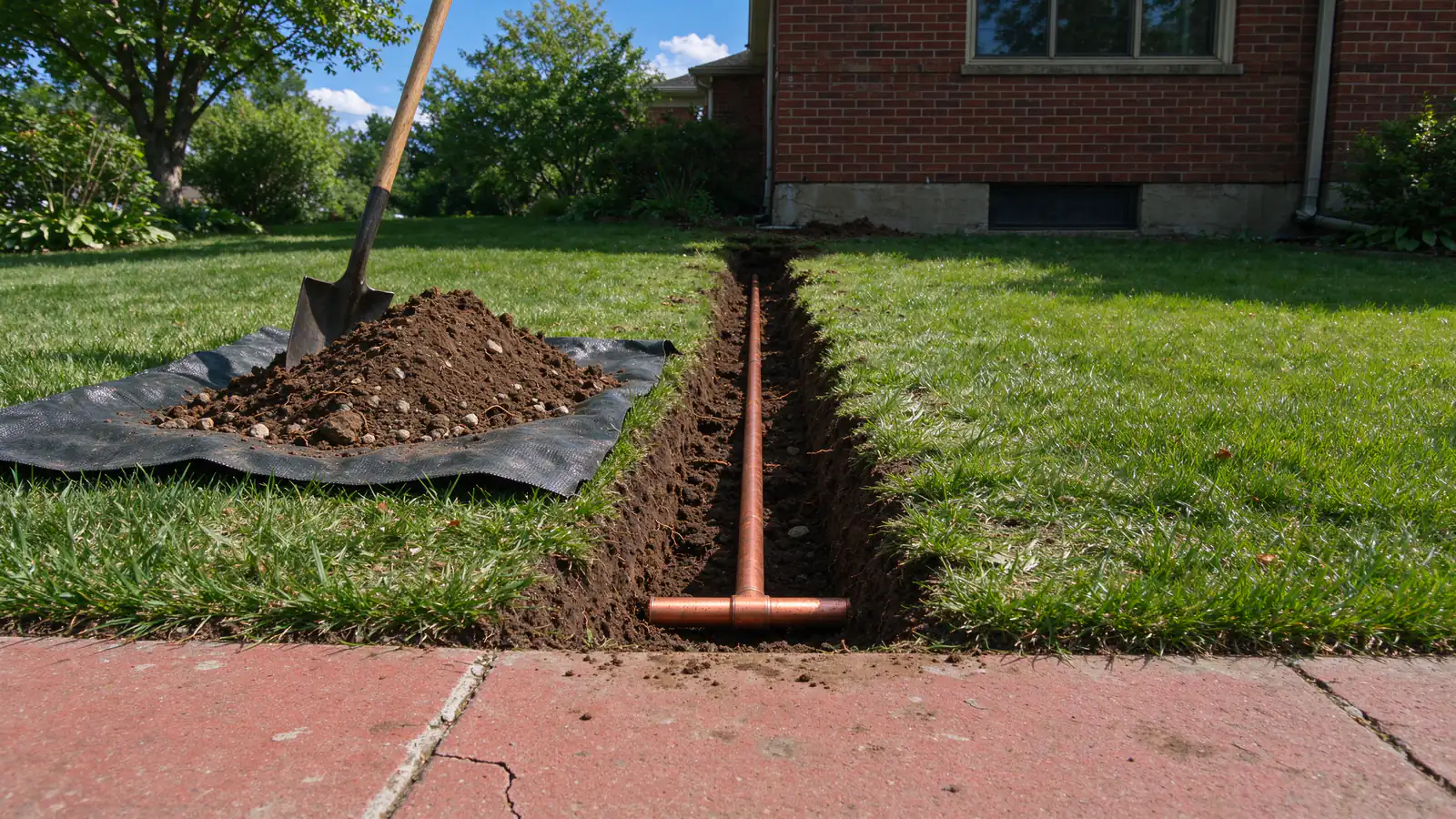
A trench is dug along the route from the curb stop to the foundation, the old line is exposed, and the new line is laid in the bottom. The trench has to reach below the 32-inch frost line Building and Zoning Services sets for Columbus, and deep trenches are a safety matter: soil can collapse, so the trench is sloped, shored or kept short. An open trench lets the whole route be seen, which helps where the old line bends or meets other utilities.
Pulling or boring the new line
Where a driveway, a mature tree, a sidewalk or a long lawn sits on the route, the new line can often be pulled or bored underground between two pits: one at the curb stop and one at the foundation. This is sometimes called trenchless, but it still means digging: the pits have to be opened, the curb stop exposed and the foundation entry cut. Rock, other utilities and old pipe that will not pull can change the method partway through.
In both cases utilities are located before any digging. The new line comes through a fresh, sealed opening in the foundation, connects to the meter setting, and is tested before the ground is closed. Restoration is listed in writing: whether the trench gets topsoil and seed, and who patches a sidewalk or driveway cut.
Water in the yard or weak flow at every tap?
Start with where the line runs and what it is made of. The repair-or-replace answer follows from that.
Licensing, permit and inspection
Work on the City water service, including service lines and taps, requires a City of Columbus water contractor license or combined water and sewer contractor license. That is a separate credential from the State plumbing contractor license and City registration needed for the inside pipe. Building and Zoning Services inspects water service lines from the meter to the building’s distribution system under a Water Service Installation permit, which carries a Water Service Plan number from Public Utilities and is issued only to registered contractors approved for that work. The Columbus repiping permit guide explains how that differs from an interior plumbing permit.
When the inside pipe is also old
A new service line ends at the meter. If the house beyond it is still on galvanized pipe, the flow problem can move inside rather than disappear, and rusty water can keep coming from the old pipe. A house that needs both jobs can plan them together so the basement connection is made once: a galvanized pipe replacement starts at the main shutoff where the service line ends. The cost guide for lead service line replacement covers what moves the price of the outside work, and whether galvanized pipes are safe covers the inside.
What drives the price
There is no public price for service line replacement outside the City’s own figure for lead lines. The cost depends on the length of the run from the curb stop to the foundation, how deep the line sits, what the route crosses, whether the method is a trench or a pull between pits, how much sidewalk, driveway or landscaping has to be restored, and what the meter setting and the foundation entry need. A written scope lists each of those before work starts.