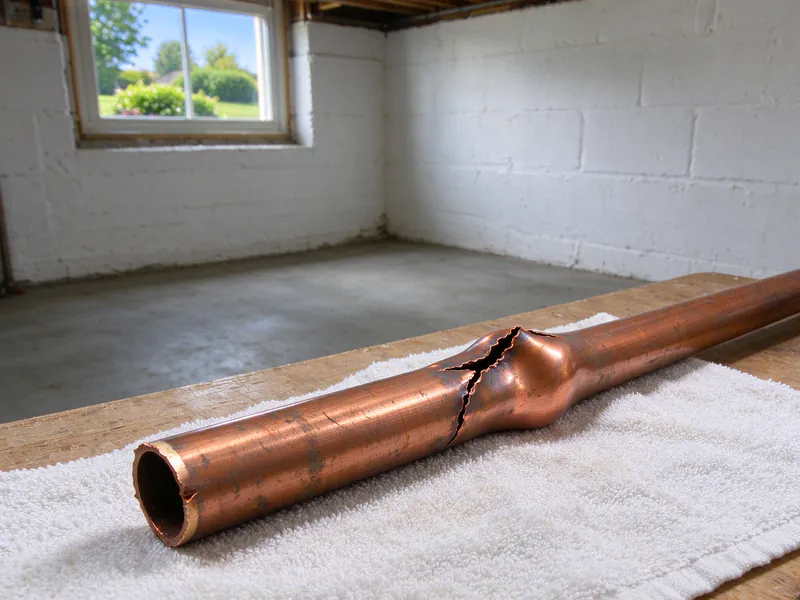
Slate Repiping Columbus handles burst and frozen supply pipe repair in Columbus houses and small buildings and across nearby Franklin County communities. A burst pipe is a supply line that split, usually because water froze inside it, and the water keeps flowing at full pressure until someone shuts it off. The repair is the second step. The first is stopping the water, and that is something you do yourself before anyone arrives. The work is carried out by licensed and insured plumbing contractors.
The steps below come before calling anyone. The burst pipe guide goes into more detail on each.
What to do right now
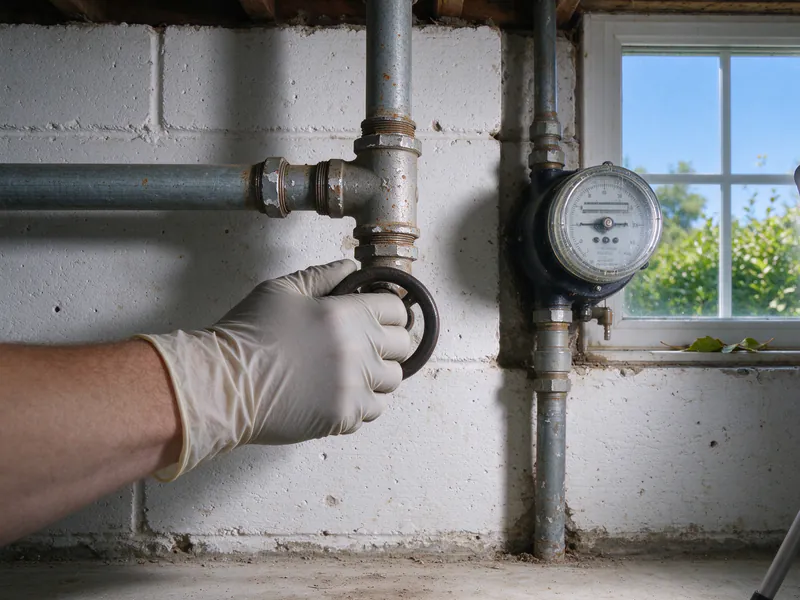
- Shut off the main. In most Columbus houses the main shutoff is in the basement near the inside water meter, where the service line comes in. Turn a round handle clockwise or a lever a quarter turn across the pipe. If the valve will not move, do not force it until it breaks. The valve at the curb is part of the City’s service, so call Columbus Water & Power or your suburb’s water department about it.
- Open a faucet at the lowest point in the house, such as a laundry tub or a basement sink, to drain pressure out of the lines.
- Deal with the water heater. Once the main is off, if hot water is draining out, set a gas heater to pilot or vacation, or switch off an electric heater’s breaker from a dry spot.
- Move what you can out of the water and start pulling it away from walls. Photograph the split and the damage before cleanup for any insurance claim.
- Call and describe the pipe, the location and whether the water heater or electrical service is involved. Emergency calls for burst pipes are answered around the clock, and the emergency pipe repair page explains what the urgent visit covers.
Never thaw a frozen pipe with an open flame. A hair dryer or warm air near the pipe is safer, with a faucet open so meltwater can escape, and only where the pipe has not already split.
Why Columbus pipes freeze
Columbus is cold for long stretches rather than briefly. By NOAA’s 1991 to 2020 normals for the airport station, the city averages 103.2 nights a year at or below 32F, and 27.6 days a year when the temperature never rises above freezing at all. There are about 10 nights a year at or below 10F, and a couple at or below zero. Building and Zoning Services uses a frost line depth of 32 inches and a winter design temperature of 0 to 10F for the city.
Those numbers matter because a pipe freezes when the space around it stays below freezing for hours, not when it is briefly cold outside. A sustained cold spell after a mild stretch, a power outage, a furnace failure, or a house left with the heat turned low while people are away are the usual triggers. The pipes that freeze first are the ones closest to the cold: supply lines in exterior walls, the kitchen sink line under a window, hose bibb lines through the rim joist, pipe in crawlspaces and unheated garages, and lines in additions built over an open or poorly insulated floor.
How a burst pipe is repaired
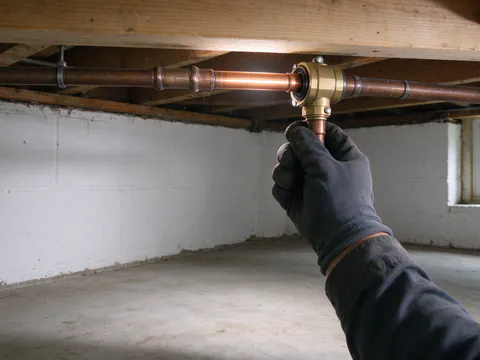
The split is cut out back to pipe that was not damaged. On copper that is easy to see, because freezing leaves a lengthwise bulge or crack. On PEX the tubing itself may survive while a fitting cracks. On older galvanized, a freeze often finds the rusted threads first, and the guide to identifying pipe material helps tell which you have. New pipe goes in and joins the existing material through a listed fitting or transition, the same way any supply pipe repair is made.
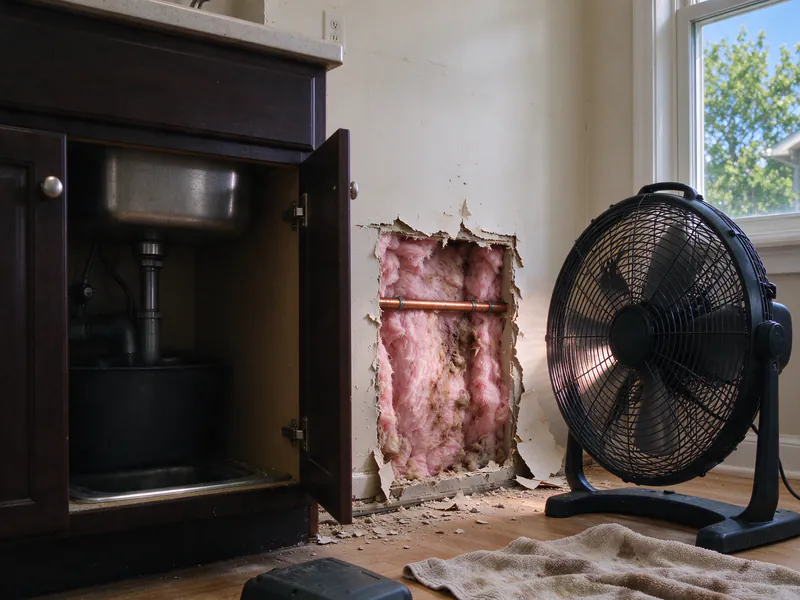
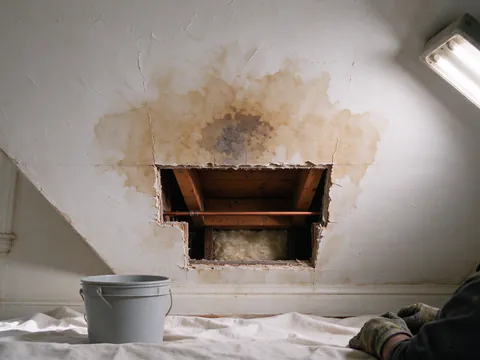
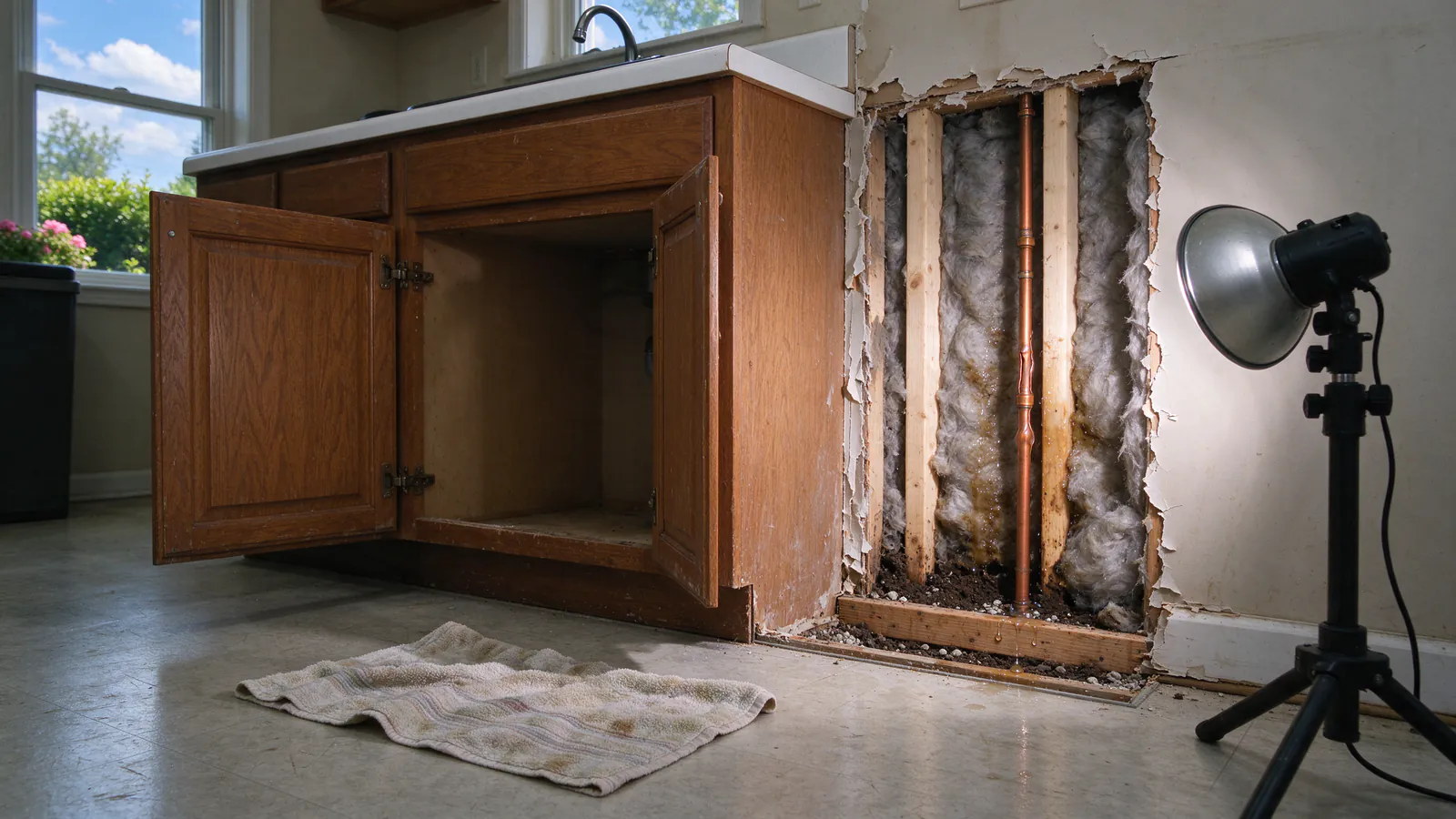
The rest of the run is checked as well. A pipe that froze can have weakened spots that have not opened yet, and fittings loosened by the ice may leak later. Bringing the whole frozen run up to pressure before closing anything is how those are found. If the split was inside a wall, the opening also shows whether the cavity is wet and needs drying, which is a separate job for a water damage restoration company. The page on calling a plumber for water leaks covers that side, including how insurance usually treats a sudden burst.
Main is off, pipe is split?
Describe where the split is and what the pipe is made of. The repair and the run around it are checked before the wall is closed.
Rerouting and insulating exterior-wall runs
A pipe that froze once will freeze again unless something changes. Repairing the split puts the same pipe back in the same cold spot. There are three ways to change that, and the right one depends on the house.
Reroute the line inside
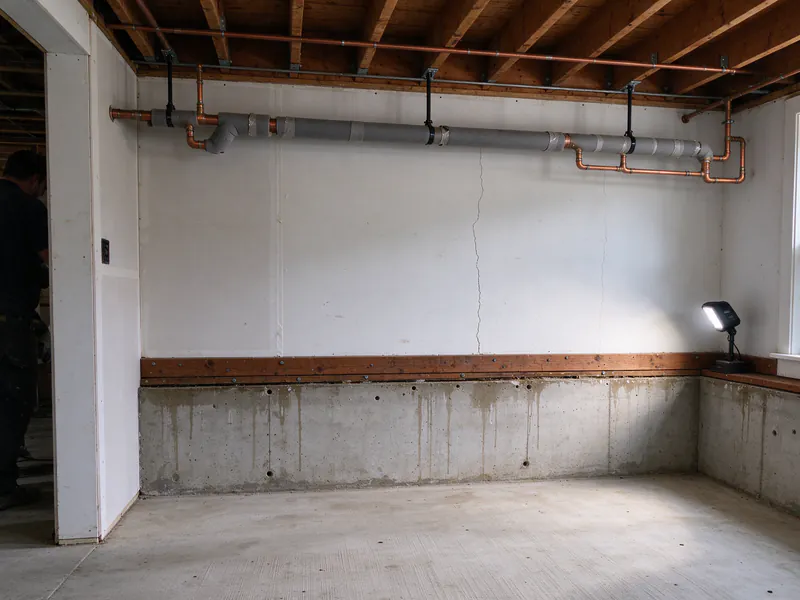
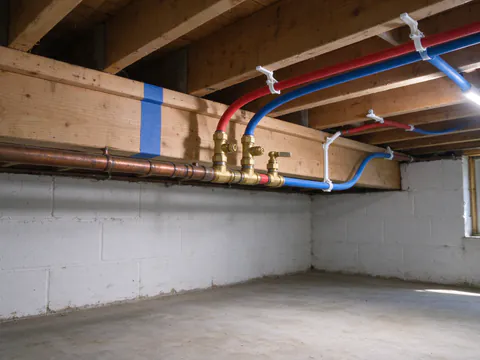
Moving the supply line from an exterior wall to an interior wall, a cabinet back or the basement ceiling takes it out of the cold altogether. This is the most reliable option, and it is often a short reroute: a kitchen sink line that drops into the basement through the floor rather than running up an outside wall, for example. In a house that is being partially repiped or fully repiped anyway, the new layout should keep lines off exterior walls wherever possible.
Insulate and air-seal
Where the line cannot move, the cavity around it can be improved. Insulation goes on the outside of the pipe and, more importantly, between the pipe and the cold side of the wall. Air leaks matter more than people expect. A gap in the rim joist or a hole for a cable can blow freezing air directly onto a pipe in an otherwise warm basement. Sealing those gaps is often the cheapest fix there is. If you cannot find where a slow drip is coming from after a thaw, water leak detection narrows it down before walls are opened.
Protect the hose bibbs
Outside faucets are a common freeze point. A frost-free hose bibb puts the valve inside the heated wall, but only works if the hose is removed before cold weather so the line can drain. An interior shutoff and drain valve on the hose bibb line gives a second layer of protection. The freezing pipes in Columbus winter post covers what to do each fall.
Does new pipe stop freezing?
Not by itself. PEX can stretch slightly as ice forms, so it often survives a freeze that would split copper, but fittings can still crack and repeated freezing still damages it. Copper splits more readily but is just as protected as PEX once it is inside the heated space. The material choice is covered in the PEX vs copper guide; the freeze answer is location. A new pipe in the old exterior-wall route is a repair, not prevention. In a house where several runs have frozen and the pipe is old anyway, a whole-house repipe is the chance to move every line inside.
What a burst pipe repair depends on
There is no set price for a burst pipe. It depends on how much pipe the freeze damaged, how much of the wall or ceiling has to open to reach it, the material, and whether the line is repaired in place or rerouted. Water damage cleanup, drying and finish repairs are separate from the plumbing and are usually priced by a restoration company. Insurance often treats a sudden freeze split differently from a slow leak, and the homeowners insurance guide explains the general distinction.