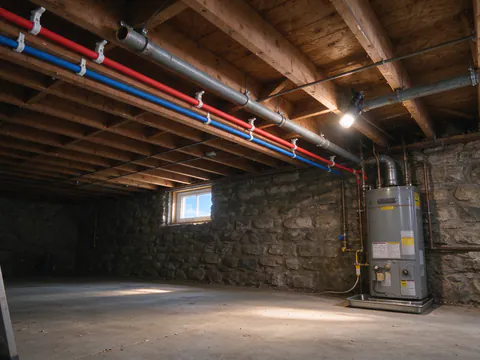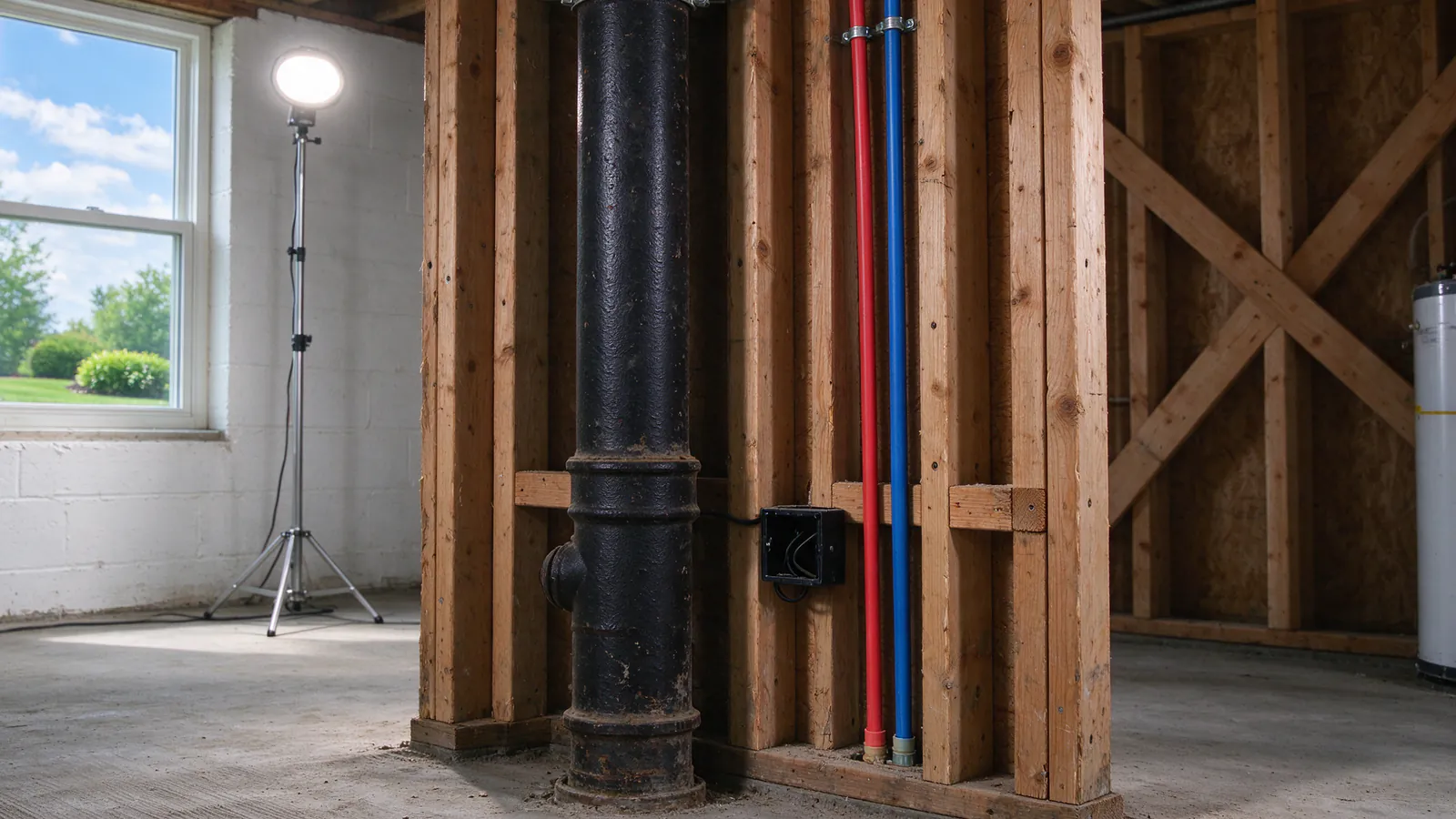
No. A repipe replaces the water supply piping: the hot and cold lines that carry pressurized drinking water from the main shutoff to every fixture. Drain, waste and vent piping, which carries used water out of the house, is a separate system, and the sewer line outside is a third. Slate Repiping Columbus offers and manages whole-house repiping in Columbus and nearby Franklin County communities and, as a separate service, cast iron stack replacement for older drain stacks. This guide explains how the systems differ and when it makes sense to do both.
Three systems in one house
Water supply
The supply system starts where the buried service line comes into the house, in most Columbus homes through the basement wall near the inside meter. From the main shutoff a main line runs to the water heater and splits into hot and cold, with branches to each sink, toilet, tub, shower, appliance and hose bibb. The pipe is small, half an inch to an inch on most branches, and it is under pressure all the time, so a leak sprays or drips whether or not anything is running. Older Columbus houses have galvanized steel or copper here; new work is PEX or copper. This is the system a repipe replaces.
Drain, waste and vent
The drain, waste and vent system, often shortened to DWV, carries used water away. It is not under pressure; it works by gravity, so every horizontal drain slopes downward. Each fixture drains through a trap that holds a little water to keep sewer gas out, into a branch, and from there into the stack: the wide vertical pipe that runs from the basement to the roof. The top of the stack is the vent, which lets air in so drains flow and lets gas out above the roof. At the bottom, the stack turns into the building drain, which leaves the house through the foundation. In houses from the early twentieth century, the stack and building drain are usually cast iron, sometimes with galvanized steel for smaller drain and vent branches.
Sewer lateral
Outside the foundation, the building drain becomes the sewer lateral, a buried pipe that runs to the public sewer in the street or alley. Its ownership, materials and repair methods belong to a different trade and a different set of rules, and it is not part of a repipe or a stack replacement.
Why the two inside systems get confused
Supply and drain pipes sit side by side in the same walls, especially in a bathroom wet wall, and both can be old metal in an older house. A leak from either shows up as a stain on the ceiling below. A homeowner who hears “the pipes are bad” may not know which system was meant, and a quote that just says “replace plumbing” does not say either.
The quick way to tell them apart is size and direction. A supply pipe is narrow and can run up, down or sideways. A drain pipe is wider, always slopes down, and the stack is the largest pipe in the house, usually three or four inches across. The guide to identifying pipe material covers what each metal looks like.
What a repipe quote should cover
A clear whole-house repipe quote describes the supply system only, and it should say so. It lists the new pipe from the main shutoff to each fixture, the material, the valves, the fixture reconnections, the pressure test, the permit and every wall or ceiling opening with who closes it. The Columbus repipe cost guide shows what typically sits inside that price.
What a repipe quote normally does not cover:
- Drain lines, traps and the stack
- Vent piping through the roof
- The building drain and the sewer lateral
- The buried water service line from the curb to the meter, which is water line replacement
If a quote is unclear, ask which of these it includes. A quote that is cheaper because it leaves something out is not the same scope as one that includes it.
Walls opening for a repipe?
Ask about the stack while you are at it. One set of openings is easier to live with than two.
When the stack gets replaced too
A cast iron stack does not have to be replaced just because the supply pipe beside it is. Plenty of old stacks are still sound. But a repipe is a good time to look, because the walls the stack runs through are often the same walls opened for the new supply lines.
Signs that the stack is worth replacing while the walls are open:
- Rust stains, weeping or a visible crack on the stack, especially at hubs and fittings
- Slow drains on upper floors that keep coming back after the traps are cleaned
- A sewer smell that persists after traps, toilet seals and vents have been checked
- Old repairs with rubber couplings or patches in more than one place
None of these proves the stack has failed; a slow drain can be a clogged trap, and a smell can be a dry floor drain. A look at the stack and, where it matters, a camera inspection settle it. If it is replaced, the cast iron stack replacement page covers the choice of PVC, ABS or new cast iron, the temporary support while it is cut, and the testing before walls close.
Doing both together means one schedule, one round of openings and one round of patching. It also means two kinds of work under the plumbing permit, so the scope should list both. The guide to how invasive repiping is covers what the openings look like in practice.
Older Columbus houses
The houses most likely to have both old supply pipe and original cast iron stacks are the oldest ones. Census figures put 12.0% of Columbus homes as built in 1939 or earlier, but more than half in the 43206 ZIP around German Village and the 43205 ZIP around Olde Towne East. Old house repiping covers the particular problems of those houses, and anyone buying a house with old pipes can ask the inspector to note the supply pipe, the stack and the sewer lateral separately, since each is priced as its own job.
The short answer for a quote
When comparing quotes, line them up by system: water supply, drain and vent, sewer lateral, service line. A repipe quote covers the first. A stack replacement covers part of the second. The last two are separate jobs. Getting that clear before work starts avoids the most common surprise after a repipe: finding out the old drains were never part of it. The repiping guide covers the full process from first symptom to final inspection.