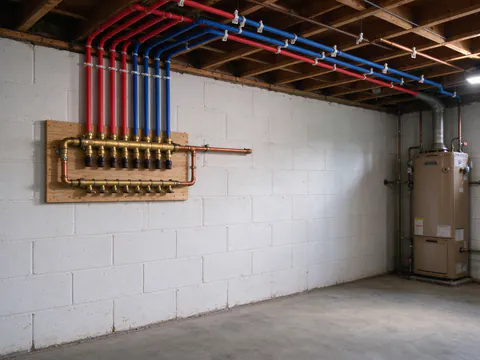
Yes, when the tubing is made and listed for drinking water and installed the way its maker and the code require. PEX sold for potable water is tested to NSF/ANSI 61, the health-effects standard for drinking-water system components, and the Ohio Plumbing Code lists it for water distribution. A listing is a floor, not a promise that nothing can go wrong.
Slate Repiping Columbus offers and manages PEX repiping in Columbus and nearby Franklin County communities, carried out by licensed and insured plumbing contractors. This guide explains what the standards test, what owners notice after a repipe, and which details decide how a PEX system holds up.
What the listing actually tests
NSF/ANSI 61 covers drinking-water system components. Under it, samples of the product are exposed to water and the water is tested for what leaches out, against health-based limits. A PEX tube or fitting that passes can be certified and marked for potable water. NSF/ANSI 14 covers plastics piping more broadly, including performance and the health-effects requirements. NSF/ANSI 372 sets the lead-free limit for fittings and valves in drinking-water systems.
The tubing itself is made to ASTM F876, and many fitting systems to ASTM F877 or another fitting standard printed on the product. Those standards set dimensions, pressure and temperature ratings, and tests for how the material holds up.
The 2021 International Plumbing Code, which the Ohio Plumbing Code is built on, lists PEX for water distribution. That is why PEX is a normal choice for a repipe in Columbus and its suburbs, as long as the product is listed and the installation follows the manufacturer’s instructions. The PEX vs copper guide covers how the two compare once safety is settled.
What the listing does not cover
A listing tests a product as made, in a lab, under set conditions. It does not test how the product was stored, whether it sat in sunlight, whether the fittings matched the tubing, or how it was supported. People also ask whether PEX releases PFAS or microplastics. The drinking-water standards test for contaminants against health limits; they do not settle every compound people ask about, and no honest guide should claim more than the standards say.
Taste and odor after a repipe
Some owners report a plastic taste or smell from new PEX in the first days or weeks. Research on new plastic plumbing has found that small amounts of organic compounds left from manufacturing can be released into water that sits in new pipe, and that the release falls as the pipe is used and flushed.
A few practical points follow. A thorough flush after the pressure test helps; the guide to how long repiping takes shows where testing and flushing fall in the schedule. Water that has sat overnight in a long PEX run is more likely to carry a taste than water drawn after a minute of use. A taste that persists past the first weeks, or appears at only one fixture, points to something worth checking, such as a different product used in one branch or a fixture issue unrelated to the pipe.
Chlorine and the rating on the tubing
Public water systems keep a disinfectant in the water so it stays safe all the way to the tap. Over time, that disinfectant can wear on plastics, particularly in hot water that moves through the pipe constantly. PEX standards account for this with a chlorine-resistance rating, shown as part of a material designation code printed on the tubing; the first digit of that code describes chlorine resistance.
What matters for a Columbus house is matching the product to the use. A hot water recirculation loop keeps hot water moving through the pipe for hours a day, which is the hardest duty a PEX line sees. A product rated for continuous hot-water recirculation is the safe choice for that loop. The City’s water quality report names the treatment Columbus uses; owners on Westerville’s separate water system should check that utility’s report, since its treatment is confirmed per address.
Brands are not interchangeable here. Some owners ask whether every PEX-A product is built to the same standard. Each must meet the same minimum standards to be listed, but manufacturers make different products and some have had problems in the past. Asking which product and fitting system a scope names, and keeping that record, is reasonable.
Sunlight and storage
Ultraviolet light damages PEX. The same material code on the tubing includes a UV-exposure rating that limits how long it can be exposed before installation, and once installed it has to be covered. PEX should never run exposed outdoors or sit in daylight from a basement window. In practice this means tubing is stored out of the sun before a job, and any run near a window or in an open garage is sleeved or boxed in.
Want to know what PEX would go in your house?
A written scope names the tubing, the fitting system and where each line runs.
PEX-A, PEX-B and PEX-C
The letters describe how the polyethylene is crosslinked during manufacture. They are not grades of quality.
| Type | How it is made | How it handles | Usual fittings |
|---|---|---|---|
| PEX-A | Crosslinked during extrusion (peroxide method) | Most flexible; kinks can often be repaired with heat | Expansion fittings with a ring; some systems also take crimp or press fittings |
| PEX-B | Crosslinked after extrusion (silane method) | Stiffer; holds its coil shape more | Crimp or clamp rings over insert fittings; some expansion systems |
| PEX-C | Crosslinked by electron beam after extrusion | Stiffer; less common in whole-house work | Crimp or clamp fittings |
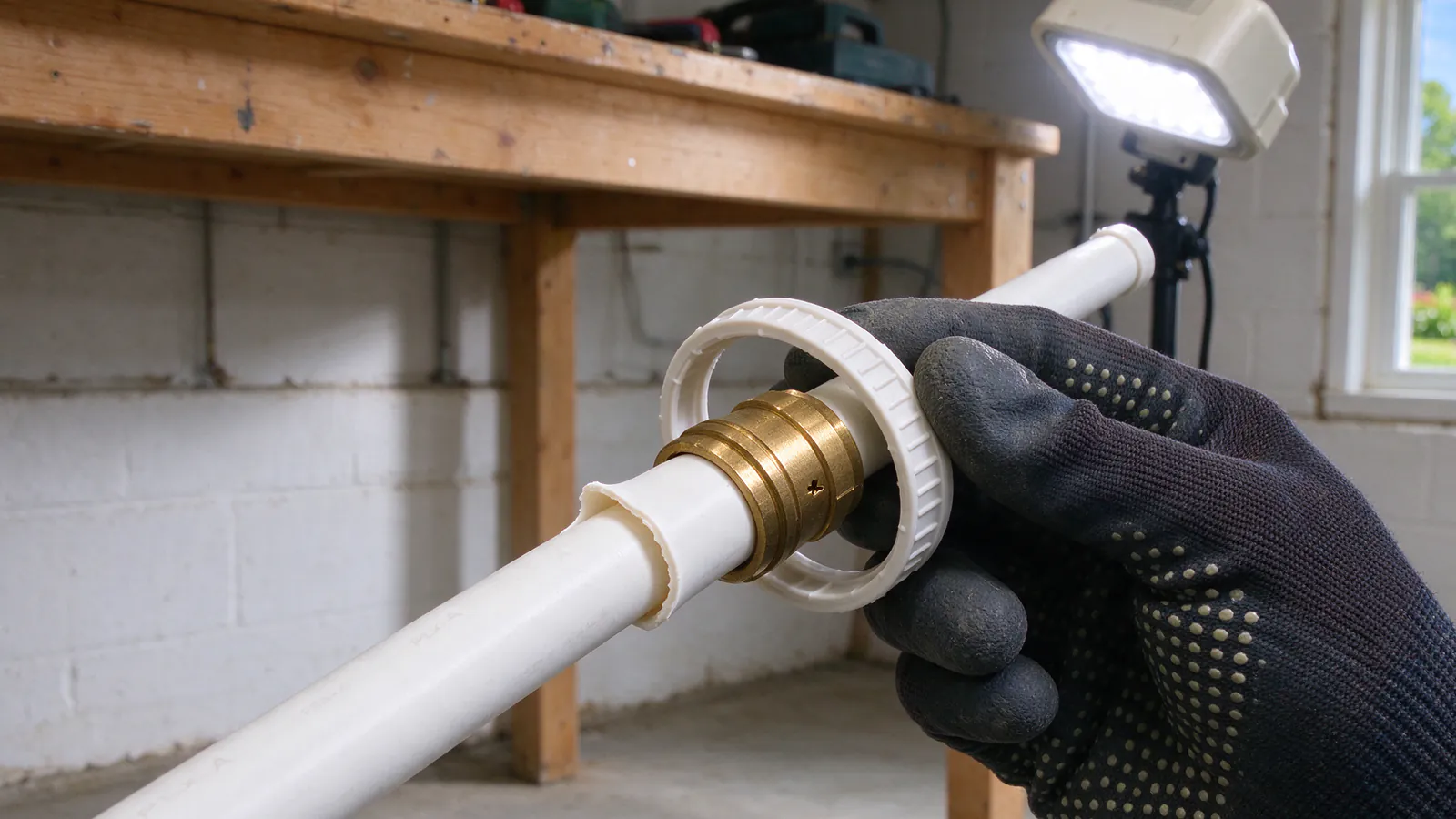
The practical difference is in the fittings. Expansion fittings used with PEX-A have a bore close to the tubing’s own, so they restrict flow less at each joint. Insert fittings used with crimp or clamp rings sit inside the tube and narrow the bore a little at every joint, which the system’s sizing has to allow for. Either can work well; the manifold vs trunk-and-branch guide explains why layout and sizing matter as much as the type.
Lead and the fittings
PEX tubing contains no lead. The fittings are where lead questions belong. Many PEX fittings are brass, and brass sold for drinking water must meet the lead-free limit. That was not always true: according to the City of Columbus, brass fittings could contain up to 8% lead until 2014. A repipe that replaces old valves and fittings along with the pipe removes that older brass. Some PEX fitting systems use plastic fittings instead of brass.
Lead in older Columbus plumbing more often comes from a lead service line, galvanized pipe that sat downstream of one, lead solder on copper joined before 1986, or old fixtures. The guide to identifying pipe material and the Columbus lead service line program guide cover those sources.
How long PEX lasts
There is no honest single number. How a PEX system ages depends on the product and its ratings, water temperature and disinfectant, whether it was kept out of sunlight, whether it was supported and protected from sharp edges and heat, and whether it freezes. PEX is not a temporary pipe, and it is not a pipe that never fails. A listed product, installed to its instructions and the code, is the most reliable predictor available; claims of a guaranteed lifespan are not.
What to check on a PEX repipe
- The tubing print shows its ASTM standard and a drinking-water certification mark.
- The fitting system matches the tubing, and the scope names both.
- Lines near water heaters follow the manufacturer’s clearance and connection rules.
- No PEX is exposed to sunlight; runs near windows or outdoors are covered.
- Any recirculation loop uses tubing rated for that duty.
- The system is pressure tested and flushed before walls close.
- Electrical bonding is checked where metal pipe was replaced, and the whole-house repiping scope lists who does it.
Choosing a material is one decision in a larger plan. The repiping guide shows where it fits, and a walk-through turns it into a scope for a specific house.