The double is a Columbus fixture: two households side by side under one roof, sharing a party wall and, quite often, more plumbing than either of them knows. Slate Repiping Columbus offers repiping for doubles, duplexes and two and three unit houses across Columbus and nearby Franklin County communities. The work is carried out by licensed and insured plumbing contractors under the plumbing permit for the building.
These buildings are concentrated in the older neighborhoods. Roughly one in five homes in the 43201, 43202, 43205 and 43206 ZIPs sits in a building of two to four units, by Census Bureau count, against 12.6% for the city. The County Auditor’s files list more than a thousand duplex-style dwellings each in 43201, 43202 and 43206. Most were built when galvanized pipe was standard, so a double repipe is usually an old house repipe with a second household added. Buildings of four or more units belong on the commercial and multi-unit repiping page instead.
In practice that means doubles in German Village and Schumacher Place, in south Clintonville and Old North Columbus, around Olde Towne East, and on parts of the Hilltop. The pipe in each is similar to a single-family house of the same age. What changes is that two kitchens, two or more bathrooms and two laundries hang off a system that may have been laid out for one family and split later, and that two households live with the schedule.
Which half does each line feed?
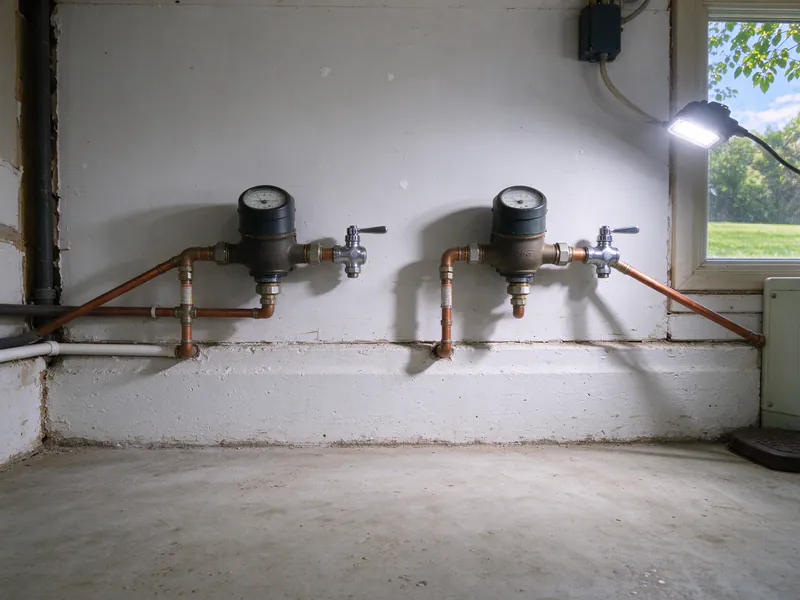
The first visit in a double is mostly tracing. Some doubles have two service lines, two meters and two mains, so each half is its own system. Others have one service line and one meter, with a main that branches to both sides. Many fall in between: two meters, but a cold line that crosses the party wall to feed a fixture on the other side, or a laundry tied into the neighbor’s main during a long-ago repair.
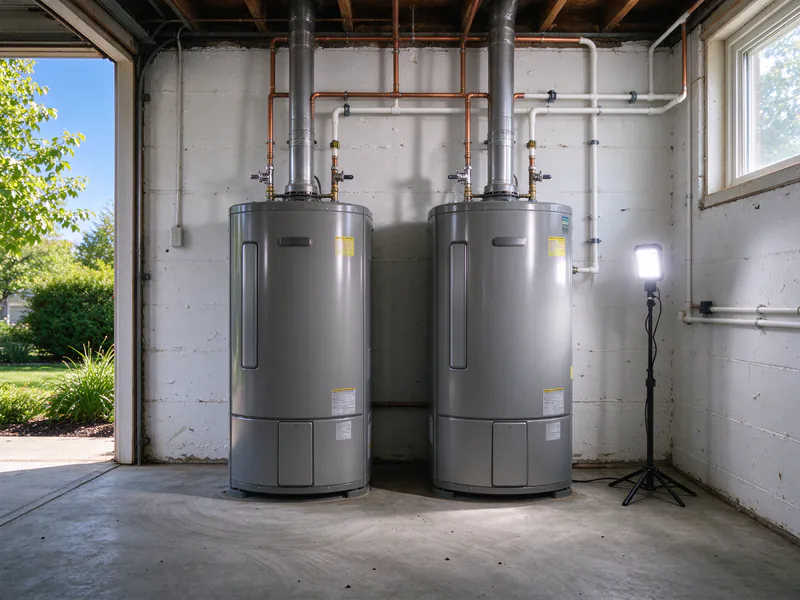
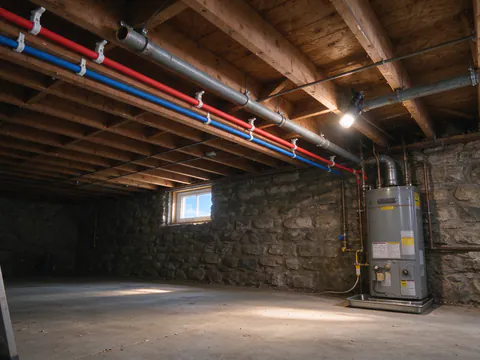
The walk-through starts at each meter, follows each main and marks which fixtures it reaches, then checks the result by shutting a valve and seeing what goes dry. It also records each unit’s water heater, because two heaters on one main share the same flow, and measures pressure and flow at the top fixtures of each side.
One main or two
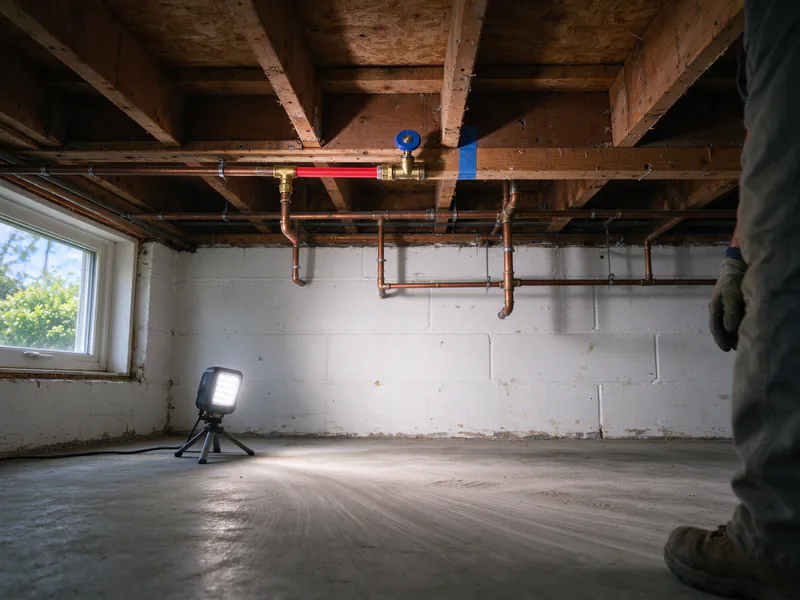
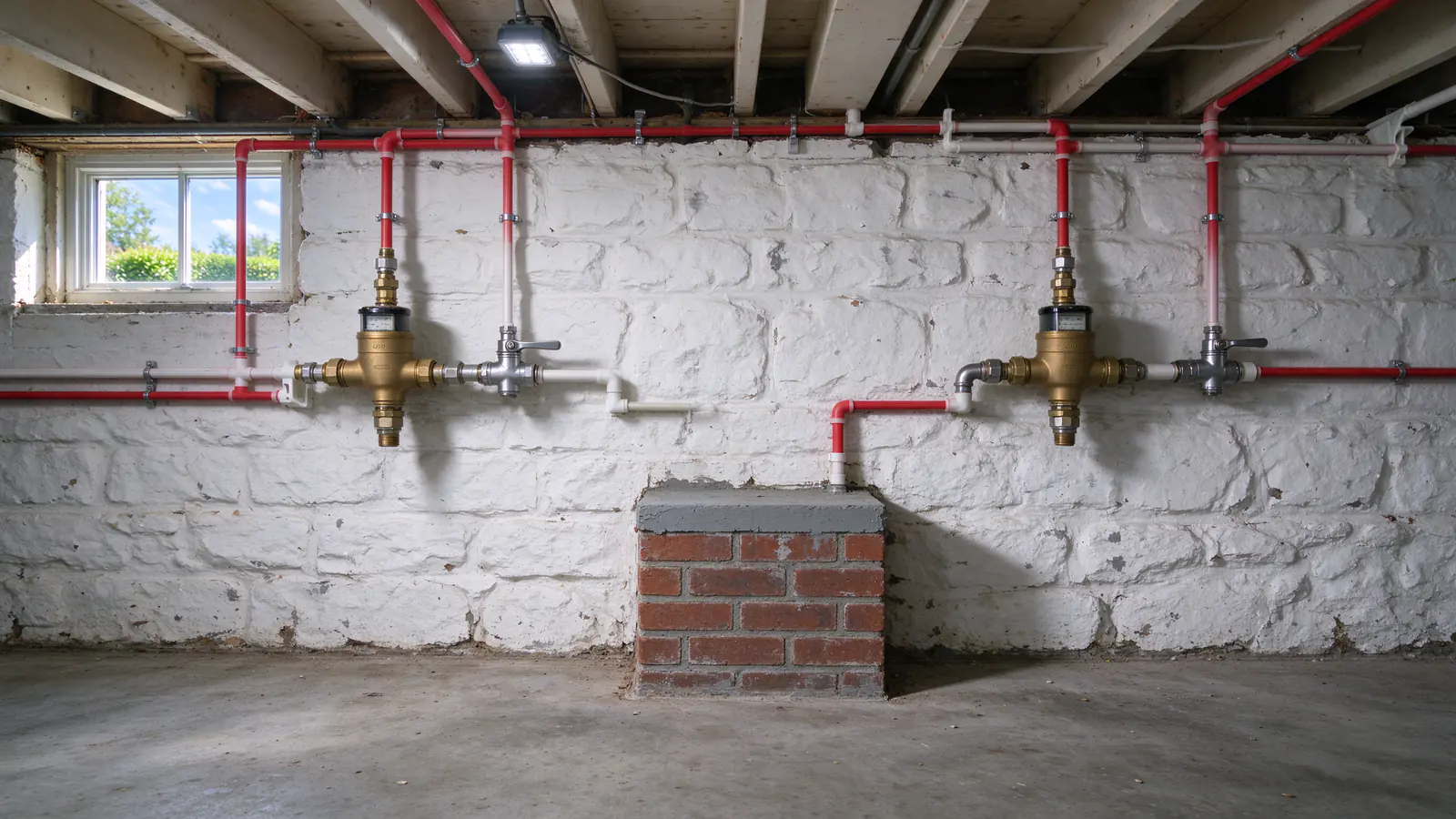
Where each half has its own meter and main, each can be repiped as its own system, now or later. Where the halves share one main, the new main is sized for both units’ fixtures, and a shutoff is added for each side so one household’s leak does not shut off the other. Ohio’s rule calling for a shutoff for each unit is written for buildings larger than three units, but in a double it is still one of the most useful things a repipe can add.
The buried service line is a separate question. Inside Columbus, the City’s lead and galvanized line program replaces service lines street by street, and only the owner listed with the Franklin County Auditor can sign the work agreement for the building. Where one service line feeds both halves, both sides depend on it. The Columbus lead service line program guide explains how that work and an interior repipe can be scheduled around each other.
Crossing the party wall
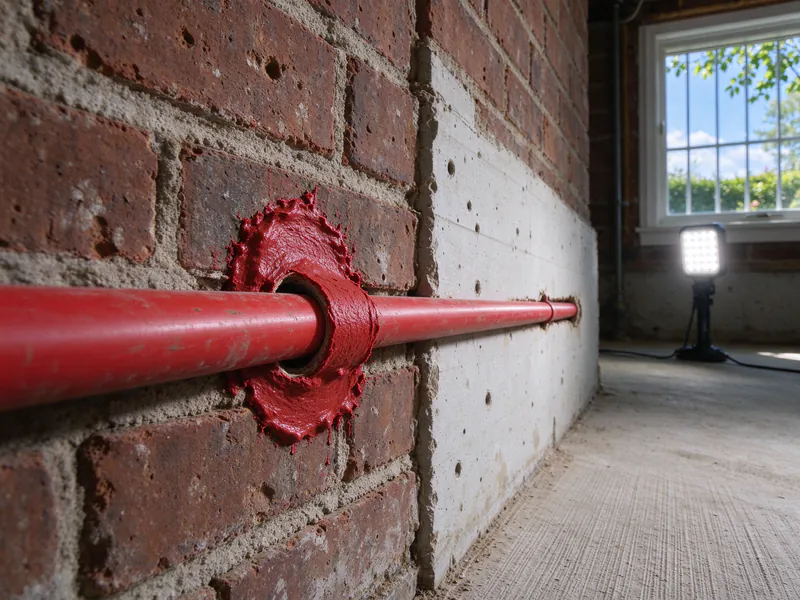
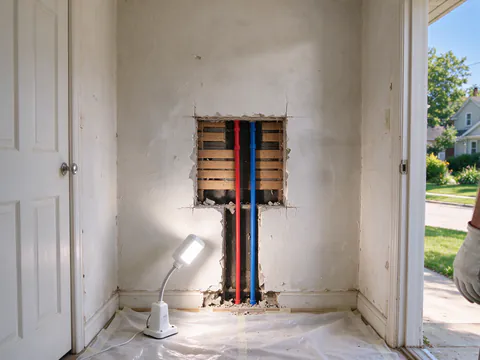
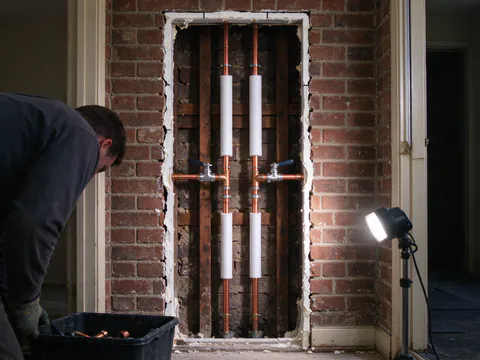
The party wall between the halves of a Columbus double may be brick or framing. Old lines sometimes pass through it, and any new pipe that crosses it has to restore the fire separation around the penetration. Where practical, the new layout keeps each unit’s pipe on its own side, so a future repair to one half does not mean opening the other.
When only one half is repiped, any old line that crosses into it from the other side is either replaced or capped. Otherwise the new side can keep drawing water through old galvanized pipe, and the owner pays for a repipe that still delivers rusty water to one fixture.
Two households, one old system?
The walk-through maps which line serves which unit before anything is cut.
Keeping both households on water
A double repipe is planned so that neither household goes a night without water. New lines are run while the old ones still serve both sides. Each unit is then cut over on its own, usually one fixture group at a time, and a shared main is switched once at a set time. Both households get the schedule in writing beforehand: which days, roughly how long the water is off and which rooms have open walls. The guide to how long a repipe takes covers typical timing.
Access is the other part. In a double, the upstairs bath on one side may only be reachable from a closet on the other, or the basement may be split by a wall with one door. The scope says which rooms in each unit need to be cleared and when.
Three-unit houses and stacked flats
A three-unit house, whether a converted single-family or a building with a flat on each floor, falls under the same 1, 2 or 3 family code and permit as a double. The plumbing is usually stacked: risers carry water from the basement main up through each unit to the one above. Replacing a riser affects every unit it passes through, so stacked flats are often repiped together, with one floor’s walls opened at a time.
Permit, testing and price
Under the Residential Code of Ohio, the Ohio Plumbing Code governs 1, 2 and 3 family dwellings, so a double or triplex takes the City of Columbus residential plumbing permit: $275 with two inspections. The City issues homeowner permits only for single-family homes the owner occupies, so a double needs a State-licensed, City-registered contractor even when the owner lives in one half. In suburbs that contract with Franklin County Public Health, the city issues the permit and the County reviews the plan, with a fixture count that has to match. The Columbus repiping permit guide covers the details.
Each unit’s new piping is pressure tested and flushed before its walls close, and every shutoff is labeled with the unit it serves. There is no published Columbus price range for a double. It is driven by the fixture count of both units, how much of the main is shared, the climb to upper floors and the patching; the repipe cost guide explains each driver, and the whole-house repiping page describes what each unit’s system includes.